
Free written scope consultation - allowances, timeline, and change-order rules on paper before a single trade is scheduled
Cambria Home Additions & ADU: The Fort Worth Owner’s Guide
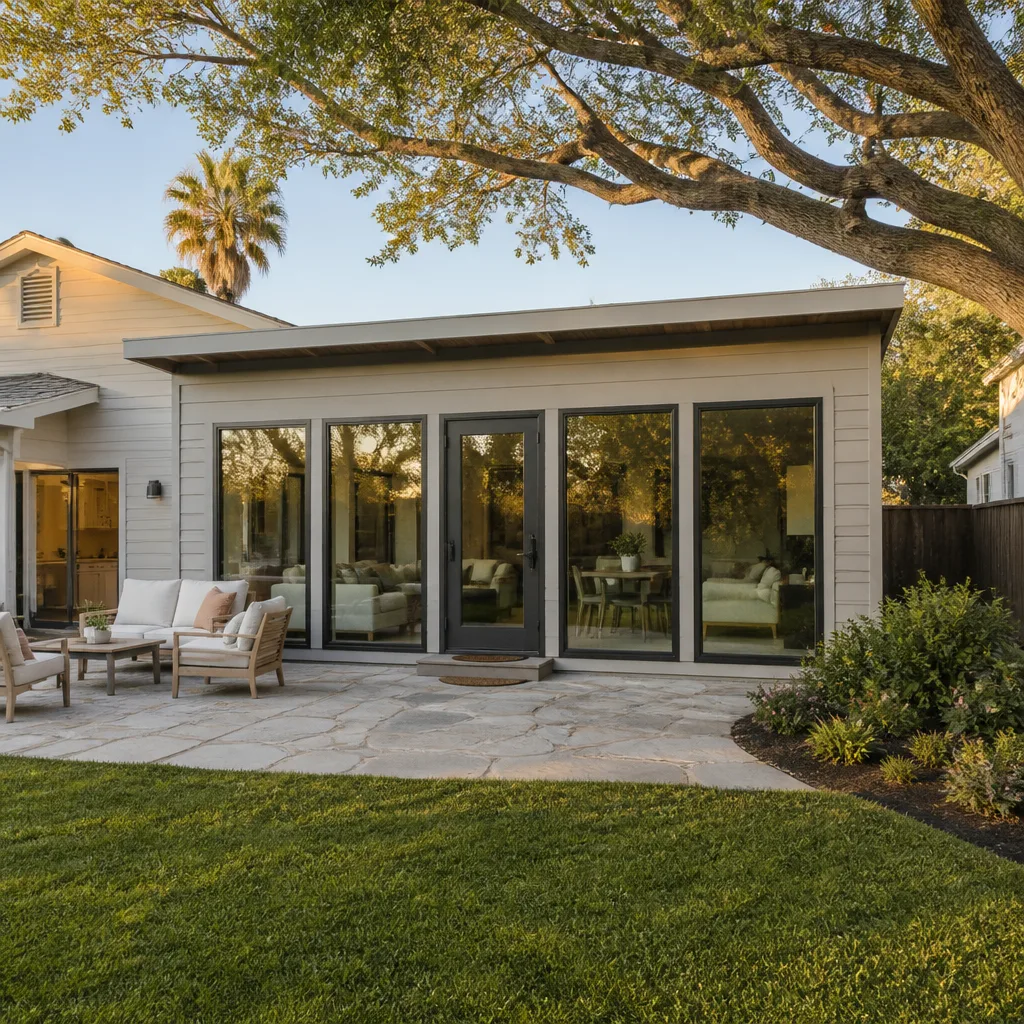
Cambria home additions and ADU projects in Fort Worth typically run $45,000 to $130,000, with attached ADUs landing closer to the top of that range and detached units pushing past $180,000 depending on square footage and site conditions. That’s the number most of our clients want before we talk about anything else, so there it is. The way most Fort Worth homeowners discover they need us is not a failed part in the traditional sense. You’re not calling because a spring snapped. You’re calling because the Cambria quartz island you spec’d for what was supposed to be a simple bump-out now needs structural changes nobody mentioned when you signed. Or the ADU you planned for your mother-in-law hit a catch with Fort Worth setback requirements, and the surface you wanted for the kitchenette no longer fits the revised footprint.
We’re Bradford Remodeling Co Fort Worth, led by Curtis Lane. We’re an independent contractor, not affiliated with Cambria. But we work with their product line every week, and we know exactly what happens to a home additions or ADU spec when the foundation shifts, the roofline changes, or the rough-in moves six inches. That’s where your Cambria investment gets protected or gets wasted. We make sure it gets protected, with a written price before we start and a one-year guarantee on everything we build.
Which Cambria Applications This Applies To
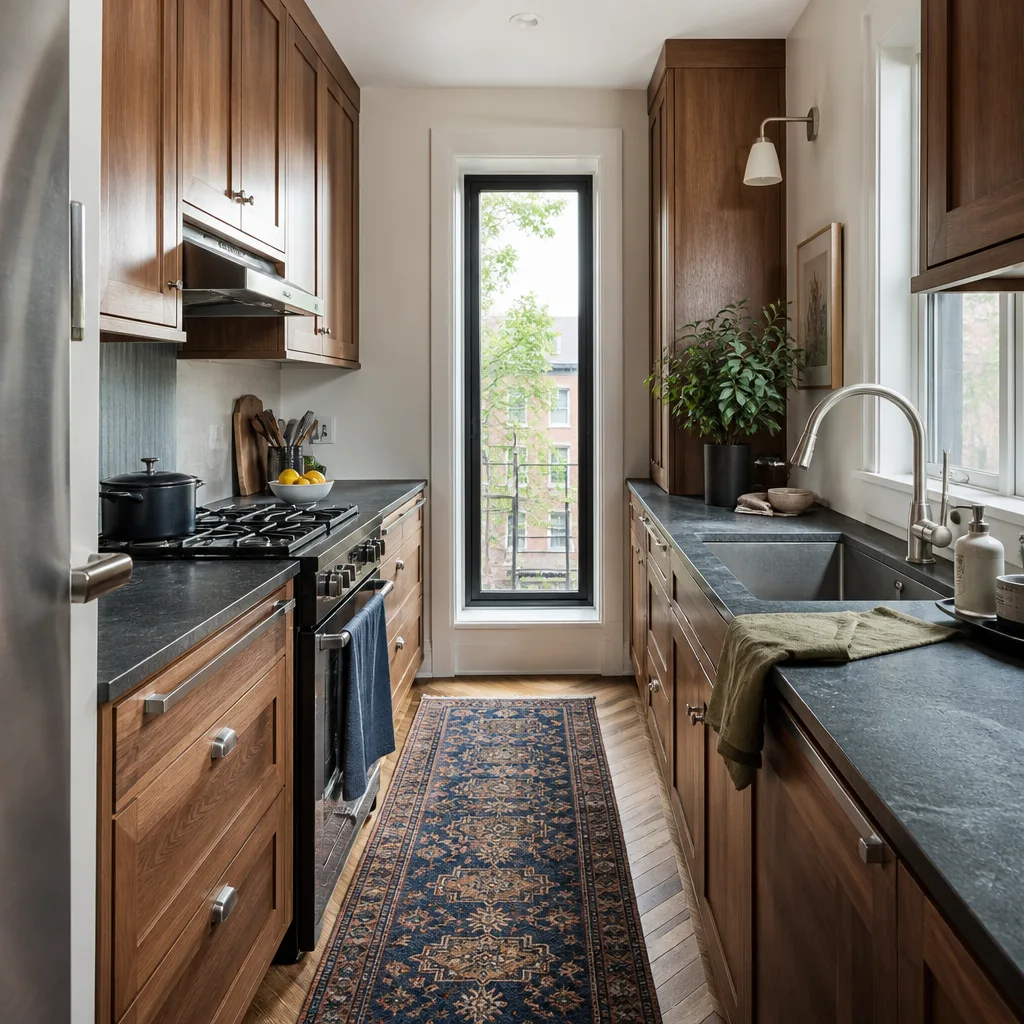
Cambria is a quartz surfacing product, not a mechanical system, so the “part” that fails in a home addition or ADU is almost always the interface between the surface and the structure. In our Fort Worth work, that means three things: the cabinetry substrate the slab sits on, the overhang and support system for islands and peninsulas, and the seam placement that gets renegotiated when a wall moves. Here’s what Curtis Lane tells homeowners to look for before they sign anything:
First, identify your Cambria design series. Classic series (like Brittanicca, Torquay, and Berwyn) are 1 cm or 2 cm thickness depending on the year installed. Newer designs in the Marble and Artisan collections are typically 3 cm. The thickness matters because a home addition built for a 1 cm slab cannot carry a 3 cm overhang without additional corbels or steel support. That’s the kind of detail that lands on a change order if the remodeler isn’t reading the spec before the framing goes up.
Second, check the engineered support spec. For a 3 cm Cambria slab, unsupported overhangs beyond 10 inches require brackets or posts. For 2 cm slabs, anything beyond 6 inches. In an ADU kitchenette, that number decides whether your peninsula floats or needs legs. We’ve fixed plenty of Fort Worth additions where the original bidder skipped the corbel spec and the first crack appeared within a year. That’s not a Cambria defect. That’s an installation failure.
On OEM versus aftermarket: Cambria does not sell “repair parts” for slabs. When a section chips, cracks, or gets cut wrong during an addition, you can’t order a patch panel. The fix is either a full slab replacement, an edge profile recut, or a seam relocation to place the damage in a hidden zone. We’ve done all three. The aftermarket route for a home addition is typically a remanufactured slab section matched by batch code, but color consistency across Cambria batches is not guaranteed. If the original batch is still available, we can match within acceptable tolerance. If not, we’ll tell you that straight before you spend a dollar.
Styles & brands we work with







Signs Your Cambria Home Additions & ADU Is Failing
- Hairline cracks radiating from an inside corner. Cambria quartz does not expand and contract like natural stone, so a crack at an inside corner almost always means the supporting substrate moved. In an addition, that movement usually comes from a settling sill plate or a beam that was undersized during the framing phase. The crack is the symptom. The framing is the disease.
- Seam separation where the island meets the new run. When an addition shifts, seams open. Cambria’s resin binder makes the slabs rigid, so they don’t absorb movement; they telegraph it. A seam that opens more than 1/16 inch means the two cabinets underneath are no longer level. Leveling compound and shims are the fix, not more adhesive.
- Chipping along the leading edge of an overhang. This is classic in ADU kitchens with limited clearance between the breakfast bar and a door swing or appliance path. The unsupported overhang flexes under impact, and Cambria’s hardness works against it here: it chips instead of flexing. Corbel brackets or a steel subframe stop the chipping at the source.
- Slab sounding hollow or drumming when tapped. Cambria should be fully bedded on a continuous mortar or adhesive layer. A hollow sound means the slab was spot-bedded, which is a shortcut that leaves unsupported zones. In a new addition, that’s a workmanship issue we correct under the 365-Day Done Right Promise if we did the install.
- Cabinet doors or drawers binding after the addition settles. Not a Cambria failure directly, but it’s the first sign the elevation has shifted. If the base cabinets are out of level, the slab above them is carrying stress it can’t flex away. That stress will find the thinnest point in the stone and crack it. Fix the cabinets, save the slab.
See the difference
 Before
 After
After Before
 After
After Before
 After
AfterReplacement Cost & What’s Included
On a standalone home addition in Fort Worth, the Cambria countertops package typically lands between $2,850 and $5,800 depending on the design series, slab count, and edge profile. But when you fold that into a full addition or ADU build, the structural work, cabinetry, rough-in, permits, and finishes push the total to the ranges listed in our pricing table below.
| Project | Fort Worth Price Range |
|---|---|
| Home Addition (full scope) | $45,000 – $130,000 |
| Detached ADU Construction | $90,000 – $220,000 |
| Garage Conversion | $30,000 – $80,000 |
| Countertop Installation (Cambria) | $2,000 – $6,500 |
| Cabinetry for Addition or ADU | $4,000 – $13,000 |
| Kitchen Remodel (interior) | $14,000 – $45,000 |
What drives the range in Fort Worth specifically: foundation type. Slab-on-grade homes on the east side and south of I-20 behave differently than pier-and-beam homes in Ridglea or near TCU. Dallas Blackland Prairie soil is a fact of life here. Curtis Lane has watched additions on the south side fail three years in because the original builder skipped a soil test. If we’re pricing your addition, a soils report gets baked into the written scope, not added as a surprise line item later. The Garrison Standard means the price we put in writing is the price you pay. Every number is on the quote before the first tool comes out.
Here’s what’s on your written quote, every time: demolition and haul-off, framing and structural per Fort Worth code, Cambria slab and fabrication, cabinet substrate, plumbing and electrical rough-in where applicable, drywall, paint, trim, permit fees, and final walkthrough. Workmanship carries the 365-Day Done Right Promise. If the Cambria seam opens inside a year, or the cabinet run shifts, we come back and correct it at no charge. That’s the written guarantee, not a verbal one.
DIY or Call Us?
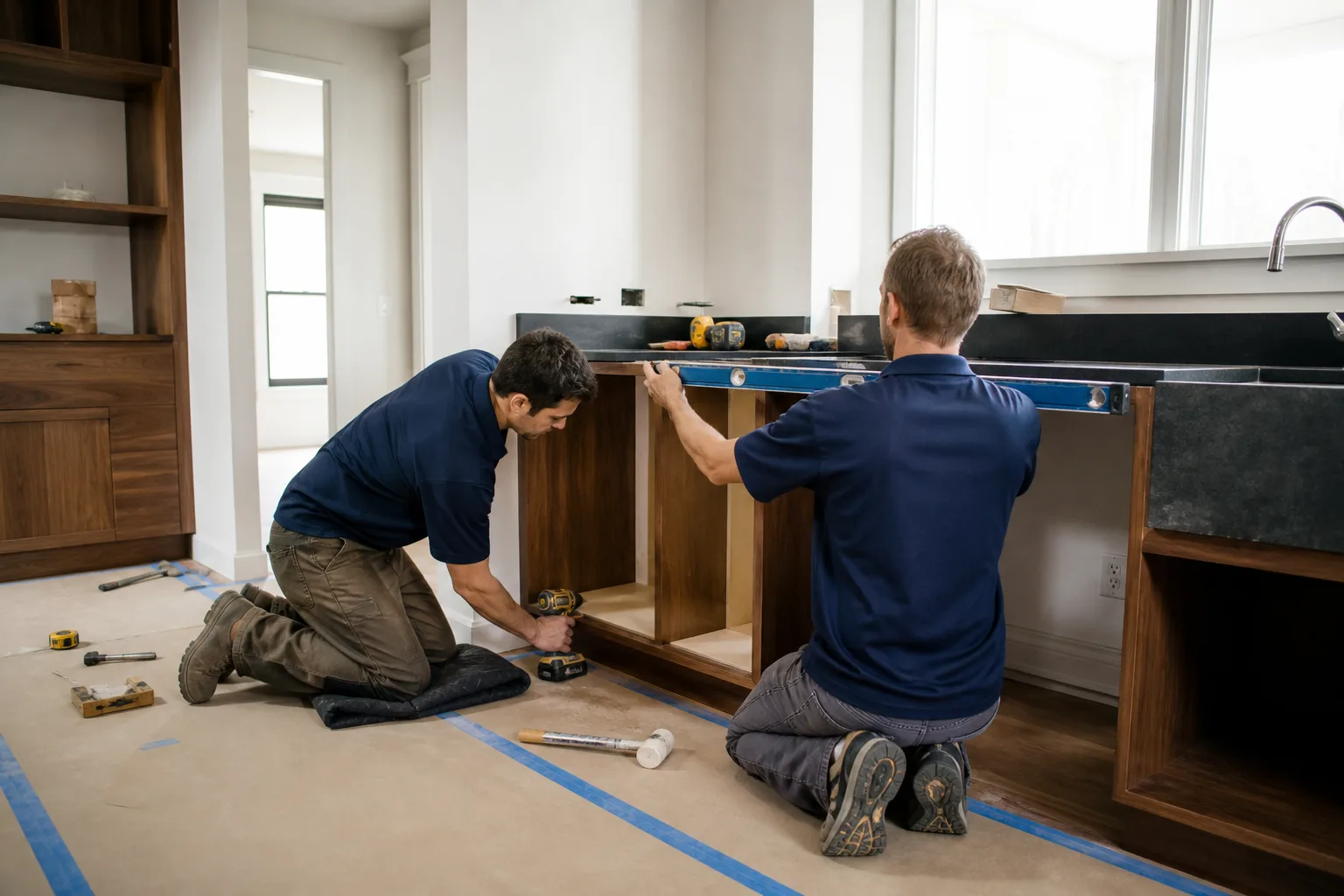
Here’s the honest split. A homeowner in Fort Worth can and should check three things before calling anyone: read the cabinet door alignment with a 4-foot level, inspect the seam gap with a flashlight at eye level, and look at the overhang bracket spacing from underneath. Those observations will tell you whether you have a cosmetic issue or a structural one. What you should not attempt is releveling base cabinets, remounting a Cambria slab, or trying to patch a crack with DIY epoxy kits. Cambria quartz is heavy. A single island slab can weigh 400 to 700 pounds depending on size. Dropping one during a DIY relevel destroys the slab and puts whoever’s underneath it in the hospital. Same story with detaching a seam: the tension release can shift the entire run and bind the slab against a wall. We have the equipment, the shoring, and the training to do this without creating a bigger problem. Curtis Lane has pulled permits across the Southwest for two decades, and his crew gets the call when a DIY attempt turns a $400 seam fix into a $4,000 slab replacement. Call us at (682) 204-4897 before you touch it. The estimate is free, and the advice is straight.
FAQs
Cambria quartz should last 25 to 30 years with proper support and no structural movement under the slab. The limiting factor in Fort Worth is soil movement. On pier-and-beam homes with proper grading, we see slabs hold their seams for decades. On slab-on-grade additions built over expansive clay without a proper soil analysis, we’ve seen failures inside five years. The slab doesn’t fail. The foundation does.
Small chips under a quarter inch can be filled and polished by a certified fabricator, and the repair is typically invisible on darker designs. Cracks that run through the slab thickness cannot be repaired to structural strength and will eventually propagate. If your crack lines up with a cabinet seam or a framing joint, we’ll tell you whether repair is worth your money or whether replacement is the only honest answer. Call (682) 204-4897 and we’ll assess it at no cost.
A countertop-only replacement takes 5 to 10 business days from template to install, depending on the design’s production schedule. A full home addition or ADU runs 4 to 8 months from permit to final walkthrough. Fort Worth’s permitting office currently has longer turnarounds for ADU plan review than for single-room additions, so we factor that into the written timeline before you commit.
We order Cambria directly from authorized distribution with batch-specific matching, so we don’t warehouse random remnants and hope they match. That means your slab arrives with a documented batch code and a spec sheet showing thickness, finish, and edge profile. We also specify KraftMaid cabinetry, Silestone for clients who choose an alternative, and Kohler plumbing fixtures on our additions, so every material on your quote has a manufacturer warranty behind it, not just a contractor’s word.
Straight scope, firm price, no surprises at final walkthrough. That’s how Bradford Remodeling Co Fort Worth runs every Cambria addition and ADU project. If you’re pricing a home addition, an ADU, or a Cambria surface repair in Fort Worth, call (682) 204-4897. A live person answers, day or night, and we’ll put a written estimate in your hand before any work starts.
Written by Curtis Lane, Owner, Bradford Remodeling Co Fort Worth at Bradford Remodeling Co Fort Worth, serving Fort Worth and nearby areas.


