
Free written scope consultation - allowances, timeline, and change-order rules on paper before a single trade is scheduled
CGI Home Additions & ADU: The Fort Worth Owner’s Guide
If you own a CGI home addition or ADU in Fort Worth and a structural or finish component has failed, you’re not just looking for a part. You’re looking for someone who can match the material, spec the repair correctly, and stand behind the work. Most CGI home additions and ADU projects we handle run $45,000 to $130,000 for full builds or major component replacements, and the failing part is almost always one of three things: the foundation tie-in, the roof transition flashing, or the wall-to-wall connection where the new structure meets the original house.
The story we hear most often goes like this: the owner notices a hairline crack along the ceiling line, or water staining at the transition point, or a door that used to close fine now sticks. They call the original builder and get a voicemail. Then they call us. By the time we walk the site, the fix usually involves more than swapping a single part. It means correcting whatever behind that part was never done to the trade standard in the first place. That’s where most of the money goes, and it’s why we put every price in writing before we touch a thing.
Which CGI Models This Applies To
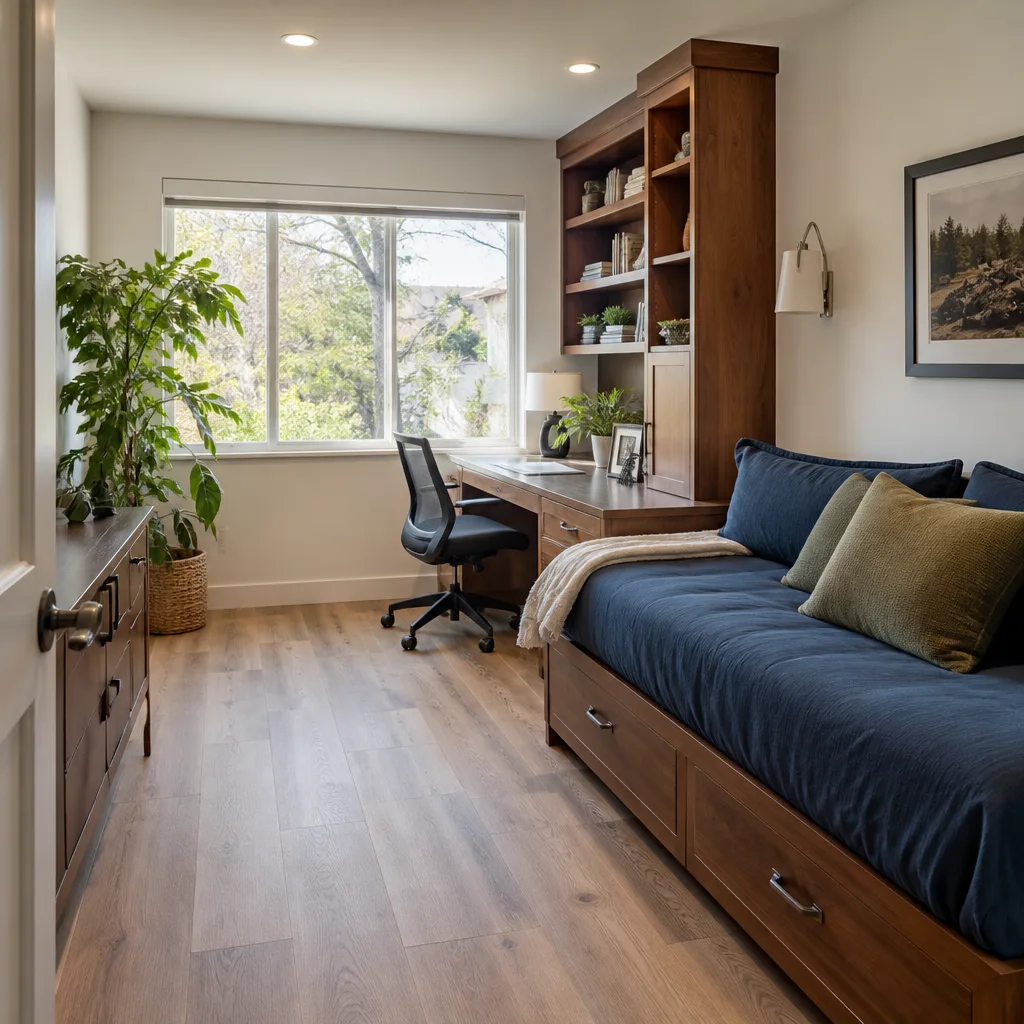
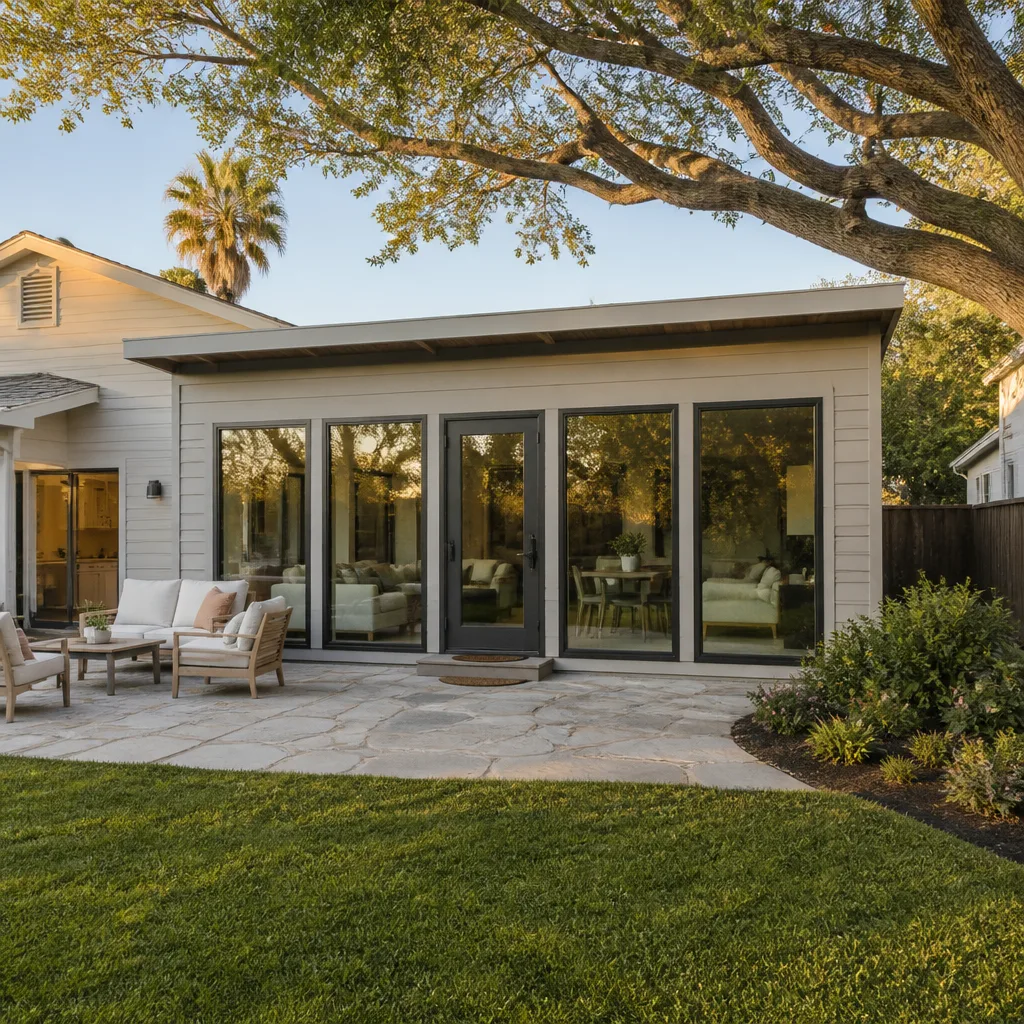
We work on CGI home additions and ADU structures of all sizes, from single-room bump-outs connected to existing slab foundations to detached accessory dwelling units with independent footings and utility rough-ins. CGI home additions and ADU construction in Fort Worth typically follows the same framing convention: engineered lumber for load-bearing walls, steel connectors at the roof-to-wall junction, and either a slab-on-grade tie-in or a pier-and-beam connection for the foundation.
Here’s the compatibility gotcha most owners don’t know until something goes wrong: the transition flashing where a CGI addition roof meets the original roofline is site-fabricated, not factory-made. That means you cannot order a replacement part from CGI. You need a contractor to cut, bend, and lap the flashing to the original roof’s exact profile. If the original crew used a one-piece approach and the roof settles even a quarter inch, that flashing tears or lifts, and water finds the seam. We’ve corrected this on homes from the Stockyards to the southern edge of Fort Worth, and the fix always starts with removing the old flashing, inspecting the decking, and cutting new flashing with proper overlap and sealant bedding.
One more thing worth knowing: Bradford Remodeling Co Fort Worth is an independent service provider, not affiliated with CGI. We work on these structures because they’re common in Fort Worth, and because the failure patterns are consistent enough that we know what to look for before we open the first wall.
Styles & brands we work with







Signs Your CGI Home Additions & ADU Is Failing
- Cracked drywall or ceiling seams along the transition line. This is the classic sign of differential movement between your original house and the addition. The two structures settle at different rates, and the seam takes the stress. A hairline crack is usually cosmetic. A crack wider than a credit card thickness points to a structural issue in the footing or the connection detail.
- Water staining or soft drywall near the roof transition. Failed flashing lets water run between the old roof and the new one. By the time you see the stain inside, the decking underneath has likely been wet for months. Fort Worth’s spring storms and summer heat cycles make this worse: the repeated wet-dry cycle opens the seam further.
- Doors or windows in the addition that stick or won’t latch. When the addition settles, the rough openings move with it. A door that latched fine last year but now rubs the frame means the framing has shifted. This is not a hardware problem. It’s a structure problem, and shaving the door is a band-aid.
- Cracks in the exterior masonry or stucco where the addition meets the house. This tells you the tie-in was under-reinforced. The original wall is moving, the addition is moving, and the seam wants to split. Left alone, water gets into the crack, freezes in winter, and widens it every year.
- A floor that slopes or bounces in the addition. Bounce means the floor joists were undersized or improperly spaced. Slope means the footing or slab has moved. Both are structural corrections that require opening the floor or working from below. Neither is a weekend fix.
See the difference
 Before
 After
After Before
 After
After Before
 After
AfterReplacement Cost & What’s Included
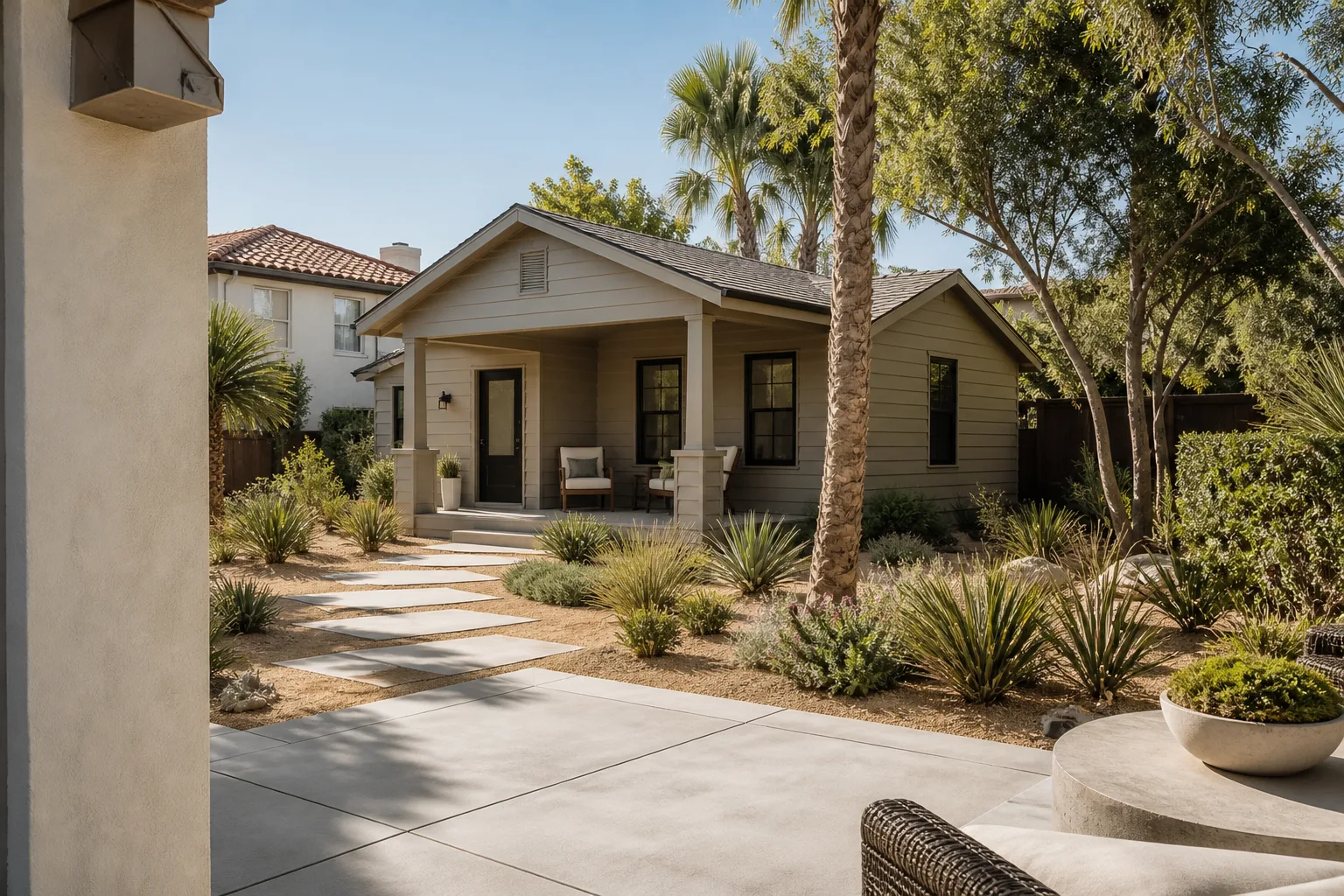
For Fort Worth homeowners, full CGI home additions and ADU replacement or major correction work typically lands between $45,000 and $130,000. The spread depends on whether we’re correcting a failed transition, rebuilding a portion of the addition, or matching an existing ADU’s roofline and wall assembly. At the low end of that range, you’re looking at transition flashing replacement, local framing correction, drywall repair, and repainting the affected area. At the high end, you’re replacing foundation connections, reframing walls, and installing new roofing at the seam.
Here’s what that price includes on every job we write in Fort Worth: a written scope with line-item pricing before any work starts, materials from documented manufacturers, and the labor to do it right the first time. We don’t give verbal estimates that grow at the door. The price is the price. If an inspection reveals something we didn’t see during the walkthrough, we document it, explain it, and put the change in writing before we proceed. No numbers move without your sign-off.
Every completed job carries the 365-Day Done Right Promise in writing. If the work fails within one year, we come back and correct it at no charge. That’s not a verbal promise. It’s on the page you sign at final walkthrough.
Cost breakdown table
| Scope of Work | Typical Installed Price in Fort Worth |
|---|---|
| Transition flashing replacement (roof-to-wall seam) | $3,500 – $8,000 |
| Local framing correction (door/window openings, a single wall) | $8,000 – $20,000 |
| Full wall-to-wall connection rebuild (original house to addition) | $25,000 – $60,000 |
| Foundation tie-in correction (slab or pier-and-beam) | $30,000 – $80,000 |
| Complete addition or ADU replacement build | $90,000 – $220,000 |
These numbers reflect what we’ve written on CGI addition and ADU correction work across Fort Worth over the past several years. Your structure’s specifics may shift the final number, but the range holds.
DIY or Call Us?
You can identify the problem yourself, and you should. Walk the transition line. Look at the flashing. Check door reveals and floor slope. Knowing what’s wrong helps you ask the right questions when you start calling contractors. What you should not do is open a wall, cut flashing, or try to force a structural correction on your own. A wall that’s carrying roof load is not the place to learn on the job. We’ve been called to enough DIY corrections in Fort Worth to know that the second repair always costs more than the first one would have.
If you want a straight read on the problem and a written price to fix it, call us at (682) 204-4897. Curtis Lane walks the site before we write the scope, which means the quote accounts for what’s actually happening in the structure, not what’s on a proposal template. Straight scope, firm price, no surprises at final walkthrough.
FAQs
A properly built addition or ADU in Fort Worth should hold its structure for 50 years or more, but the transition components (flashing, sealant, connectors) need inspection every 5 to 7 years. The Texas freeze-thaw cycle and summer heat expansion are harder on transitions than most homeowners realize. If your transition flashing was site-fabricated and bedded correctly, expect 15 to 25 years from it before inspection becomes urgent. If it was cut and slapped in, you’ll see problems within the first 5 years. Call (682) 204-4897 if you want us to inspect the transition on your Fort Worth addition.
That depends on what’s behind the surface. If the flashing is the only failed component and the framing underneath is dry and sound, we can remove the old flashing, inspect the decking, and install new flashing with proper lap and sealant. That’s a repair. If the framing is rotted or the connection has moved, the wall or roof section needs to be opened and rebuilt. We’ll open it and show you before we quote the repair versus replacement decision. Estimates are free. Call (682) 204-4897 to schedule a walkthrough.
A transition flashing replacement typically takes 2 to 3 working days. Local framing correction runs 1 to 2 weeks. Foundation tie-in correction or wall-to-wall rebuild runs 3 to 6 weeks depending on weather and what we find once the wall is open. Full replacement builds run 8 to 16 weeks. We sequence the work so your living space is disturbed as little as possible, and we clean the site daily. Get a written timeline with your quote. Call (682) 204-4897 to start.
We stock the common transition materials on every truck: flashing coil in standard gauges, sealant, connectors, and fasteners rated for exterior structural use. But the truth about CGI home additions and ADU work is that most of what goes wrong is the site-fabricated work, not a factory part you can swap out. We match the material spec and fabricate on site, then we document the spec so it’s traceable. We also work with name-brand materials throughout the structure, including KraftMaid, Cambria, and Silestone when the job calls for interior finish work. Call (682) 204-4897 and we’ll tell you exactly what we carry for your specific failure.
Written by Curtis Lane, Owner, Bradford Remodeling Co Fort Worth at Bradford Remodeling Co Fort Worth, serving Fort Worth and nearby areas.


