


Free written scope consultation - allowances, timeline, and change-order rules on paper before a single trade is scheduled
Plant Prefab Roofing: The Fort Worth Owner’s Guide
If you own a Plant Prefab home in Fort Worth and the roof is leaking, sagging, or showing water stains inside, here’s the straight answer: we stock Plant Prefab-compatible roofing materials, and a typical re-roof or major section repair runs $8,000 to $20,000 installed, depending on the square footage and what’s under the membrane. Most owners discover the failure the same way: a drip in the corner of a bedroom after a hard North Texas storm, or a soft spot they feel underfoot when they’re up there cleaning gutters. The underlying cause is usually the same: a failed seam, a punctured membrane, or flashing that separated from the prefab panel joint.
What makes Plant Prefab roofs different is how the panels marry up. The roof isn’t framed stick-by-stick like a traditional Fort Worth ranch. It’s factory-built modules with seams every 8 feet or so, and those seams are where water finds a way in. Fixing it right means knowing how the panel joints were flashed at the factory, what membrane was originally spec’d, and what the Fort Worth heat has done to it since. That’s the work we do.
Which Plant Prefab Models This Applies To
Plant Prefab has produced several model lines over the years, and the roofing compatibility question comes down to which generation your home is. The earlier LivingHomes models (the C6 and C6.1, and the later AD series) shipped with factory-installed membrane roofs over a structural insulated panel or wood-framed cassette. The more recent Custom line and the LivingHome 10 and 20 series use a similar panelized approach but with thicker insulation and different edge fastening details.
Here’s the gotcha: you can’t always tell the exact model by walking around the outside. Look for the plate sticker inside the primary module, usually near the electrical panel or inside a closet door frame. It lists the series, manufacture date, and sometimes the roof membrane spec. If that sticker is gone or faded, measure the roof edge thickness at the fascia. The older C-series runs around 8 to 10 inches of total roof depth; the newer LivingHome series runs 12 inches or more. That measurement tells us which flashing profiles and seam tapes to order before we even set a ladder.
On the OEM versus aftermarket question: the factory membrane is usually a TPO or EPDM sheet from a major manufacturer (Firestone, Carlisle, or GAF depending on the year). You don’t need to buy it through Plant Prefab. The same membrane, same thickness, same spec is available through our suppliers, and it costs less and gets here faster. The critical part is the seam welding method and the edge termination details, which have to match the original panel geometry. We match the material, then cut everything on site to the actual panel dimensions, because factory tolerances were never exact to the eighth of an inch.
Bradford Remodeling Co Fort Worth is an independent contractor. We’re not affiliated with Plant Prefab, and we don’t pretend to be. What we know is how their panels are built and where they fail.
Styles & brands we work with







Signs Your Plant Prefab Roofing Is Failing
- Water stains at the interior ceiling joints, not the center of the room. On a panelized roof, water doesn’t pool in the middle. It travels along the panel seams and shows up where two ceiling panels meet. That tells you the leak is at a module joint, not a random puncture.
- Soft spots at the roof edge near the parapet or fascia. Fort Worth’s freeze-thaw cycles open up hairline cracks at the edge termination, and water wicks into the OSB or plywood underneath. By the time you feel it give, the substrate is shot.
- Visible membrane bubbles or blisters after a hot stretch. TPO and EPDM both blister when moisture gets trapped under the membrane and the Texas sun heats it past 140 degrees on the surface. A blister is a future puncture.
- Loose or separated flashing where the roof meets the exterior wall panels. The modular joint between roof and wall sees constant movement from wind loading. Over time, the original sealant fails and the metal flashing lifts. This is the most common leak point on Plant Prefab homes we see in Fort Worth.
- Granule loss or cracking on accessory roofs (porches, carports). If your Plant Prefab came with an attached pergola or carport, that roof is often a modified bitumen product with a granulated surface. The granules protect the membrane from UV, and once they’re gone, the membrane fails within a few seasons.
See the difference
 Before
 After
After Before
 After
After Before
 After
AfterReplacement Cost & What’s Included
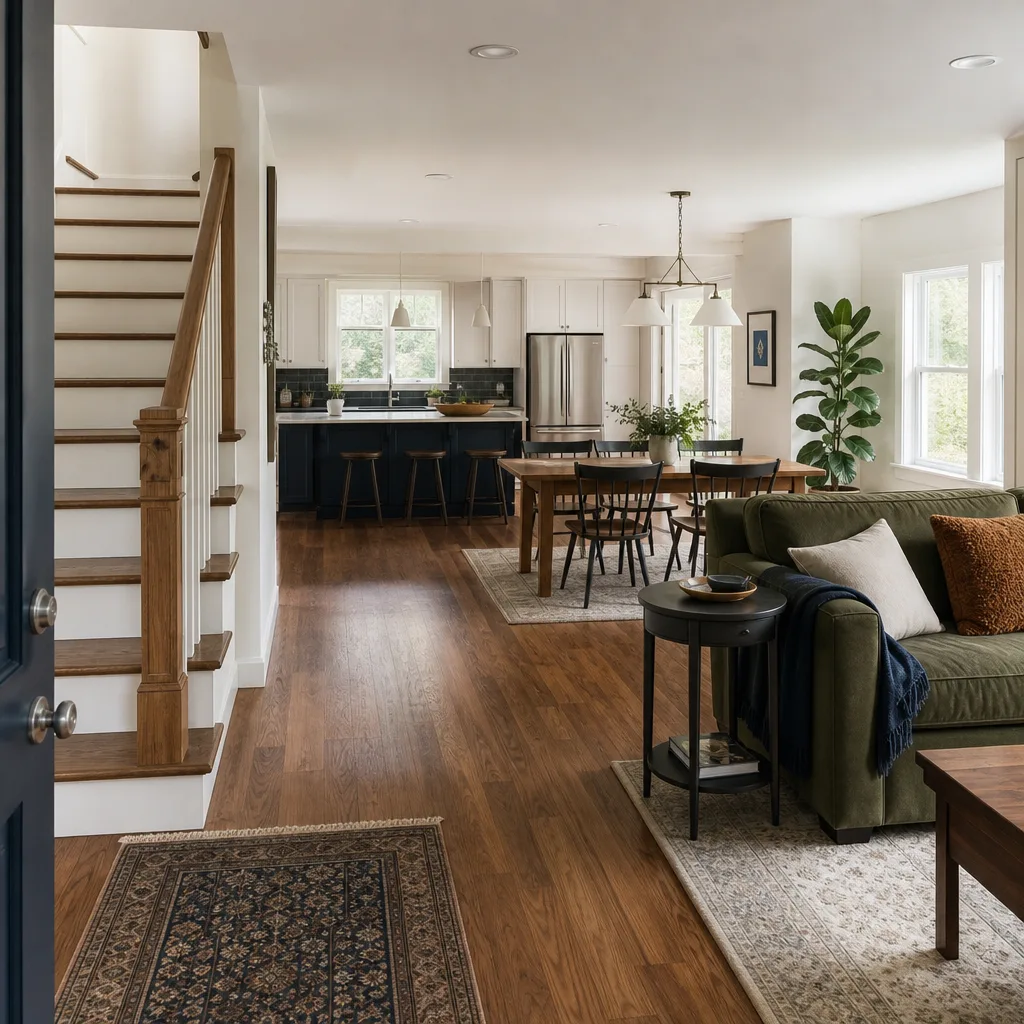
For a full Plant Prefab-compatible roof replacement in Fort Worth, plan on $8,000 to $20,000 installed. That’s the honest range. A small single-module accessory roof (a porch or carport) can run as low as $3,500 to $6,000. The big variables are square footage, how many panel seams need new flashing, and whether the substrate under the membrane needs to be replaced or just dried and re-secured.
Every bid is a written, line-item price before any work starts. No numbers move at the door. You’ll see the membrane cost, the flashing cost, the fastener and sealant cost, the labor, and the disposal fee. If we open the roof and find the decking is worse than we scoped, we stop, show you what we found, and put the revised number in writing before we cut another inch.
| Scope | Typical Fort Worth Price |
|---|---|
| Accessory roof repair (porch, carport) | $400 – $1,800 |
| Panel seam flashing repair (1 – 3 seams) | $600 – $2,500 |
| Sectional membrane replacement (partial roof) | $3,000 – $7,000 |
| Full Plant Prefab roof replacement | $8,000 – $20,000 |
| Substrate replacement (if decking is rotted) | $4 – $8 per square foot |
Every roof we do carries the 365-Day Done Right Promise in writing. If the roof fails inside that year, we come back and correct it at no charge. Not a pro-rated credit, not a warranty claim form to a manufacturer. We fix it.
DIY or Call Us?
Here’s where I’ll be straight with you, the way Curtis Lane tells every homeowner who asks. You can safely do the inspection work: look for interior water stains, check for visible membrane bubbles from the ground, and look at the flashing with a pair of binoculars. You should not walk a panelized roof membrane looking for punctures unless you know exactly where the panel edges are. A panel joint can look solid and fail under your weight, and a fall from a modular roofline is a serious injury or worse. Same goes for seam welding. A hot-air welder in untrained hands melts through the membrane and creates the leak you were trying to fix.
If the failure is a single small puncture you can see from a ladder, a roof pro can fix it in under an hour. If it’s seam separation or substrate damage, call us at (682) 204-4897. We’ll send a background-checked, uniformed tech to give you a written number before any work starts. Straight scope, firm price, no surprises at final walkthrough.
FAQs
A factory-installed membrane roof on a Plant Prefab home in North Texas typically lasts 15 to 20 years before the seams start failing, though the Fort Worth sun and hail can shorten that significantly. Older C-series homes are now right at the age where we’re seeing the first wave of seam failures across the metro. If your home is 15 years old or more, get the roof inspected even if you don’t see a leak. Call (682) 204-4897 and we’ll schedule it.
Yes, if the damage is limited to one or two panel seams or a single punctured section. A seam re-flash or a section of new membrane over intact substrate is a real, durable repair. If the substrate is rotted or the membrane is blistered across more than 30% of the roof, replacement is the honest call. We’ll show you photos of what we found before recommending either direction. Estimates are free.
Most single-family Plant Prefab roofs in Fort Worth take 3 to 5 working days from tear-off to final inspection, weather permitting. A section repair or seam re-flash is usually done in one day. We pull permits where required and you get a written scope with a start date and a completion date before the first tool comes off the truck.
We keep TPO and EPDM membrane rolls, seam tapes, termination bars, and flashing profiles for Plant Prefab-style panelized roofs in our Fort Worth inventory. We also carry compatible materials for KraftMaid, Cambria, and Silestone finishes, since we see plenty of Plant Prefab homes that spec’d those brands inside. If your exact membrane spec isn’t on the shelf, we order it and have it in hand before we schedule the tear-off. Call (682) 204-4897 for a free estimate and a written price.
Written by Curtis Lane, Owner, Bradford Remodeling Co Fort Worth at Bradford Remodeling Co Fort Worth, serving Fort Worth and nearby areas.


