

Free written scope consultation - allowances, timeline, and change-order rules on paper before a single trade is scheduled
James Hardie Roofing: The Fort Worth Owner’s Guide
If you’re looking for James Hardie roofing replacement in Fort Worth, installed pricing for HardiePlank lap siding and HardiePanel vertical siding used in roofing applications typically runs $1,800 to $6,500 depending on the roof’s exposed area, the specific product line, and whether fascia, soffit, or trim boards need matching. Most Fort Worth homeowners discover they need this work after a hail event, a wind-driven rain that left staining on the underside of the eaves, or a visual inspection that turned up cracked boards near the roofline. The part that fails is rarely the Hardie product itself. It’s the installation detail around it: the flashing at the eave, the kickout diverter at a roof-wall intersection, or a fastener pattern that pulled loose through years of Texas freeze-thaw cycles.
Key Takeaways
- Fort Worth installed pricing for James Hardie roofing-associated siding, fascia, and trim runs $1,800 to $6,500, with full roof replacement projects at $8,000 to $20,000 when sheathing and underlayment are involved.
- We stock common James Hardie profiles and color-matched trim on our trucks in Fort Worth, so most repair scopes don’t wait on a supplier order.
- Every scope gets a written price before work starts, and every completed repair carries the 365-Day Done Right Promise in writing.
Which James Hardie Models This Applies To
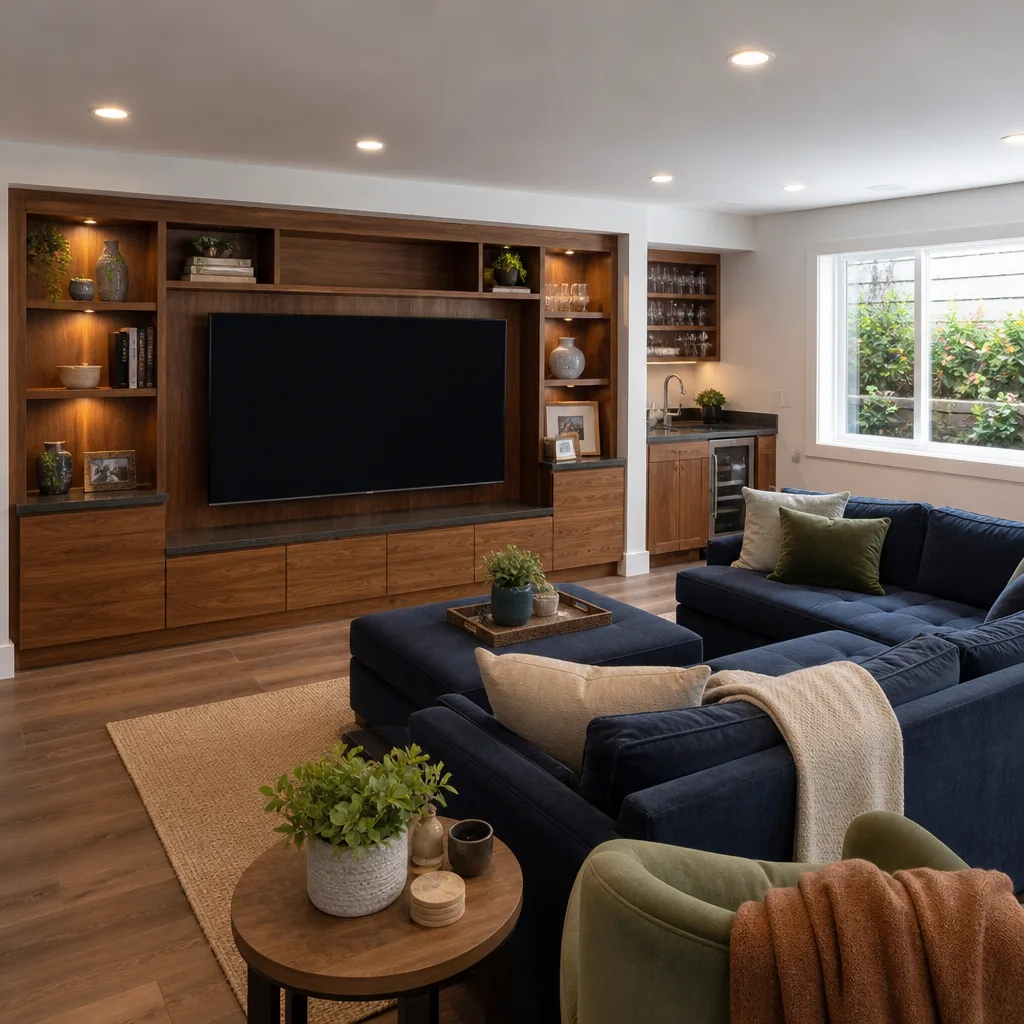
The James Hardie products that intersect with roofing in Fort Worth fall into three groups. HardiePlank lap siding in 5.25-inch and 8.25-inch exposures is the most common board we see failing along gable ends and dormer walls where roof lines meet vertical surfaces. HardiePanel vertical siding, typically 4×8 or 4×10 sheets with a stucco or smooth finish, is what most builders use under covered porches and on roof peak walls. Then there’s the trim family: HardieTrim boards in 1×4 through 1×12 profiles that wrap fascia, rake boards, and soffit returns.
Here’s the compatibility gotcha that catches Fort Worth owners off guard: James Hardie color options are not universal across product lines. A board ordered as “HardiePlank Countrylane Red” will not match a sheet of “HardiePanel Countrylane Red” from a different production run, and both will differ from a HardieTrim in the same nominal color. If you want the repair to disappear, the replacement piece has to be verified against the existing board, not against a paint chip. We do this on site before we quote, even when it means pulling a small sample from an inconspicuous area like behind a gutter downspout.
On the OEM versus aftermarket question: James Hardie does not license third-party manufacturers for their fiber cement formulation. Aftermarket products marketed as “fiber cement compatible” are not equivalent to James Hardie boards in thickness, fastener pull-through resistance, or warranty. For a roofing-adjacent repair in Fort Worth where the board will take direct sun, hail, and wind-driven rain for a decade, we spec OEM James Hardie. The only aftermarket we’ll use are the non-Hardie components that belong in any correct installation: stainless steel or hot-dipped galvanized flashing, corrosion-resistant fasteners, and sealant that meets ASTM C920 for exterior use.
Styles & brands we work with







Signs Your James Hardie Roofing Is Failing
- Water staining on the underside of the soffit or at the eave line. This means water is getting behind the fascia or around the gutter apron. The Hardie board is rarely the source. It’s a failed joint or a flashing detail that was underlapped at the roof-wall transition, and the board is showing you where the water exits.
- Cracks at fastener heads, especially on south and west elevations. Fort Worth sun heats a fiber cement board to surface temperatures over 130°F in August. If the installer fastened too close to the board edge or over-drilled the hole, thermal expansion turns a hairline into a visible crack within two or three seasons.
- Boards that ‘pop’ or feel loose when you press near the bottom edge. Hardie recommends fasteners penetrate framing or solid substrate with minimum 1-1/4 inch embedment. When boards are nailed only to the face of the sheathing edge near a roof rake, they wiggle. This is the failure we see most often on two-story gable ends where a ladder was hard to set.
- Gaps between the board and the adjacent roof flashing or counterflashing. These gaps open over time as the roof deck expands and contracts. Rain driven by a Fort Worth spring storm will push water up into that gap and behind the siding, where it rots the substrate before you see anything from the ground.
- Chalky surface with visible fiber texture on boards older than 12 to 15 years. James Hardie boards carry a 30-year finish warranty on the primed surface, but real-world Fort Worth UV and hail load take a toll. A board that has worn through the finish is not automatically a structural replacement, but it is a sign that adjacent boards are near the end of their weather resistance.
See the difference
 Before
 After
After Before
 After
After Before
 After
AfterReplacement Cost & What’s Included
For a James Hardie roofing-associated repair in Fort Worth, a typical scope runs $1,800 to $6,500. That includes the OEM James Hardie boards or trim, removal and disposal of the failed pieces, substrate inspection and repair if the framing or sheathing behind the board shows rot, new flashing where the roof plane meets the wall, color-matched fasteners, and touch-up coating on the replacement board. A full roof replacement in Fort Worth, when the sheathing and underlayment also need to come off, runs $8,000 to $20,000. The biggest driver in a roof-wall repair is not the board. It’s what we find behind the board. Rotted sheathing, a damaged roof edge, or a flashing correction that requires removing the first course of shingles moves the price toward the top of that range, and we’ll show you exactly why before we start.
The price includes a line-item scope in writing before any work begins. No numbers that move when the crew arrives. No “we found additional damage” surprise unless we actually find additional damage, and then we document it with a photo and a supplement quote before we touch it. Bradford Remodeling Co Fort Worth is an independent service provider; we are not affiliated with James Hardie, and our workmanship warranty is separate from any manufacturer warranty on the boards themselves.
DIY or Call Us?
There are things you can check from the ground: visible gaps at roof-wall intersections, boards that are cracked or missing, staining below the eave line. That’s where DIY inspection should stop for roofing work. A Hardie board at a roof line is not a high-tension part like a garage spring, but the work still happens at height, on a ladder, often against a pitched roof deck. The dangerous part is not the fiber cement. It’s the position, the angle, and the temptation to reach past your ladder’s safe working zone. Curtis Lane has watched a homeowner drop a HardiePlank board from a two-story gable and take out a gutter downspout on the way down. Nobody was hurt, but the board was 11 feet of sharp-edged fiber cement moving fast.
If the repair involves removing a board that runs under the roof edge, you’re working against the first course of shingles and its underlayment. One wrong pry and you’ve created a roof leak that costs more than the siding repair did. Call (682) 204-4897 and we’ll come out, identify the exact board, confirm the color match, and put a written number in your hand. The estimate is free.
FAQs
In Fort Worth’s climate, properly installed James Hardie boards at roof lines typically last 20 to 30 years before the surface coating needs attention, but the fasteners and flashing around them may need service at the 10 to 15 year mark. Call (682) 204-4897 and we’ll do a roof-wall inspection and tell you what’s actually wearing.
Small cracks and fastener pops can sometimes be sealed and resecured if the board is otherwise sound and the damage is not part of a water entry point, but any board that channels water behind it gets replaced. For a straight answer on your specific board, call (682) 204-4897 for a free inspection.
Most roof-wall and eave-board repairs take one day on site, with a second half-day if a color-matched paint or coating on the new board needs to cure before we call it done. We’ll put the timeline in your written scope so you can plan around it.
We keep common HardiePlank, HardiePanel, and HardieTrim profiles on our trucks in Fort Worth, along with matching flashing and fasteners, and we also stock repair materials for KraftMaid, Cambria, and Silestone lines when interior work runs alongside the exterior repair. If your specific board isn’t on the truck, we can typically source it locally within 48 hours.
Straight scope, firm price, no surprises at final walkthrough. That applies to a single James Hardie soffit repair in Fort Worth just as much as it applies to a full kitchen or a whole-home remodel. If you have a board that’s failed at the roofline, do not wait for the next storm to find the gap for you. Call Bradford Remodeling Co Fort Worth at (682) 204-4897. Curtis and the crew will show up, read the site, and give you a written number. The 365-Day Done Right Promise backs the work in writing for a full year.
Written by Curtis Lane, Owner, Bradford Remodeling Co Fort Worth at Bradford Remodeling Co Fort Worth, serving Fort Worth and nearby areas.


