
Free written scope consultation - allowances, timeline, and change-order rules on paper before a single trade is scheduled
Oldcastle Home Additions & ADU: The Fort Worth Owner’s Guide
If you own an Oldcastle home in Fort Worth and you’re looking at an addition or ADU, the installed cost typically lands between $45,000 and $130,000 for a home addition, and $90,000 to $220,000 for a detached ADU. That’s the number you should plan around before you call anyone. Most homeowners come to us after their Oldcastle home has outgrown them: a second kid, an aging parent, or the realization that working from the dining table isn’t a long-term plan. We handle the full scope from foundation to roof, and we put the price in writing before the first tool touches the ground.
Bradford Remodeling Co Fort Worth is an independent contractor, not affiliated with Oldcastle. We’ve built additions and ADUs on Oldcastle homes across Fort Worth for years, from Hemphill Heights to Wedgwood, and we know how these houses are framed, wired, and plumbed. That matters when you’re tying new square footage into an existing structure.
Which Oldcastle Models This Applies To
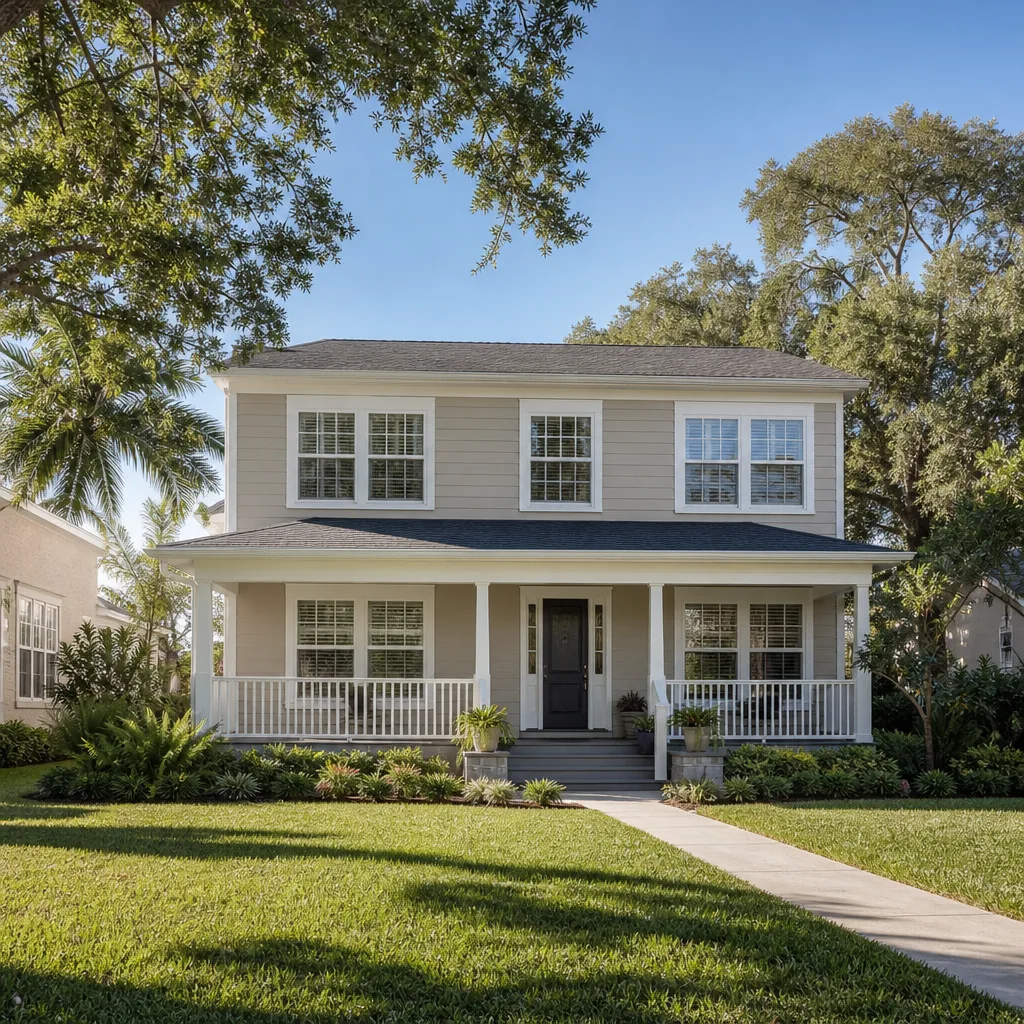
Oldcastle homes in Fort Worth run on a few distinct framing packages depending on the decade. The 1990s and early 2000s builds, common in neighborhoods like Summer Creek and Park Glen, tend to have 2×4 exterior walls and truss roofs with a 24-inch on-center layout. Newer Oldcastle builds from roughly 2010 forward, which you’ll see in developments off Chisholm Trail Parkway and around Benbrook, switched to 2×6 exterior walls for the energy code. That’s a compatibility gotcha right there: if your addition ties into the existing wall, the framing depth has to match or the transition looks wrong and insulates poorly. We verify the actual stud depth and truss spacing before we ever spec the addition, because Oldcastle’s own plans don’t always match what the framing crew actually did in 2004.
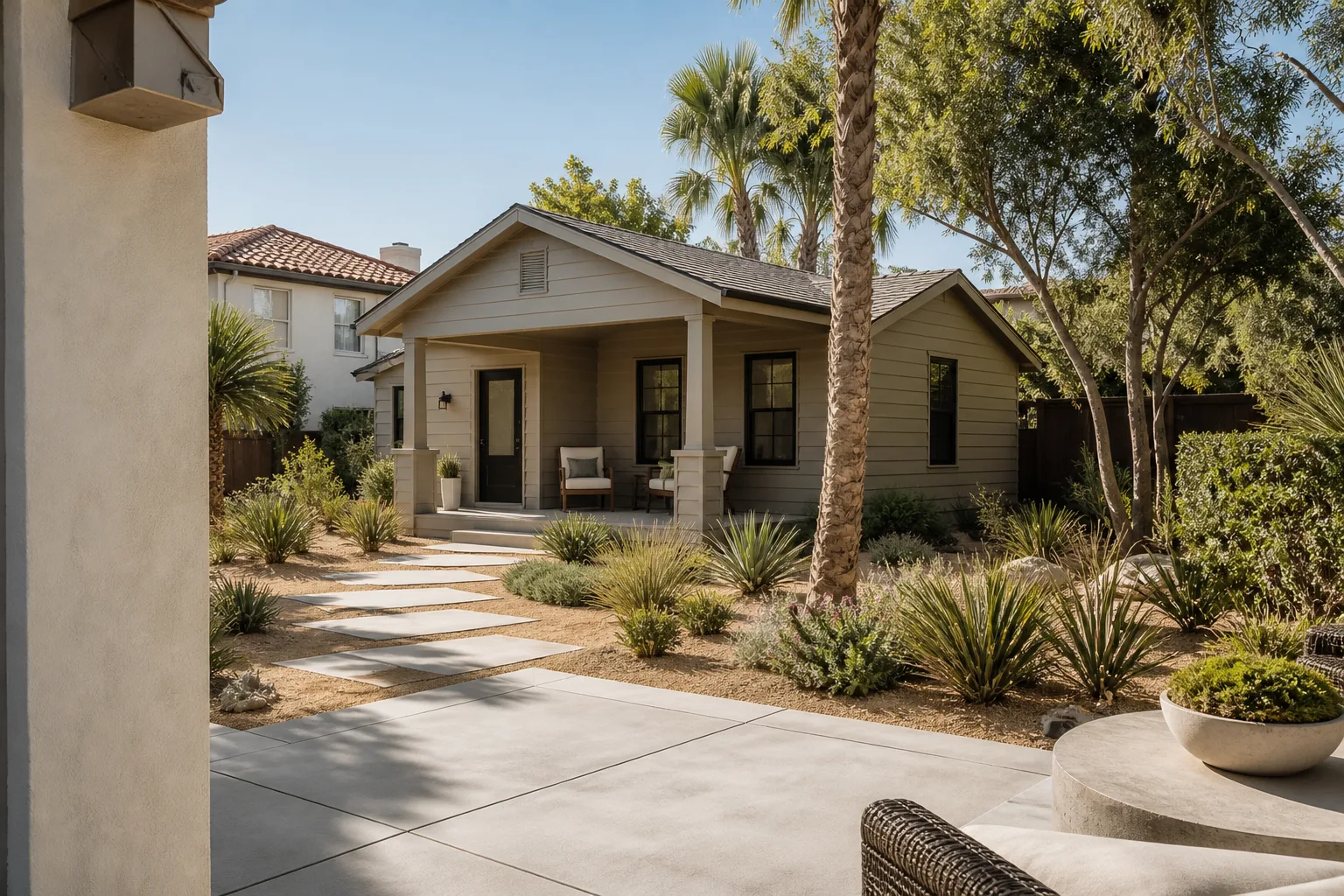
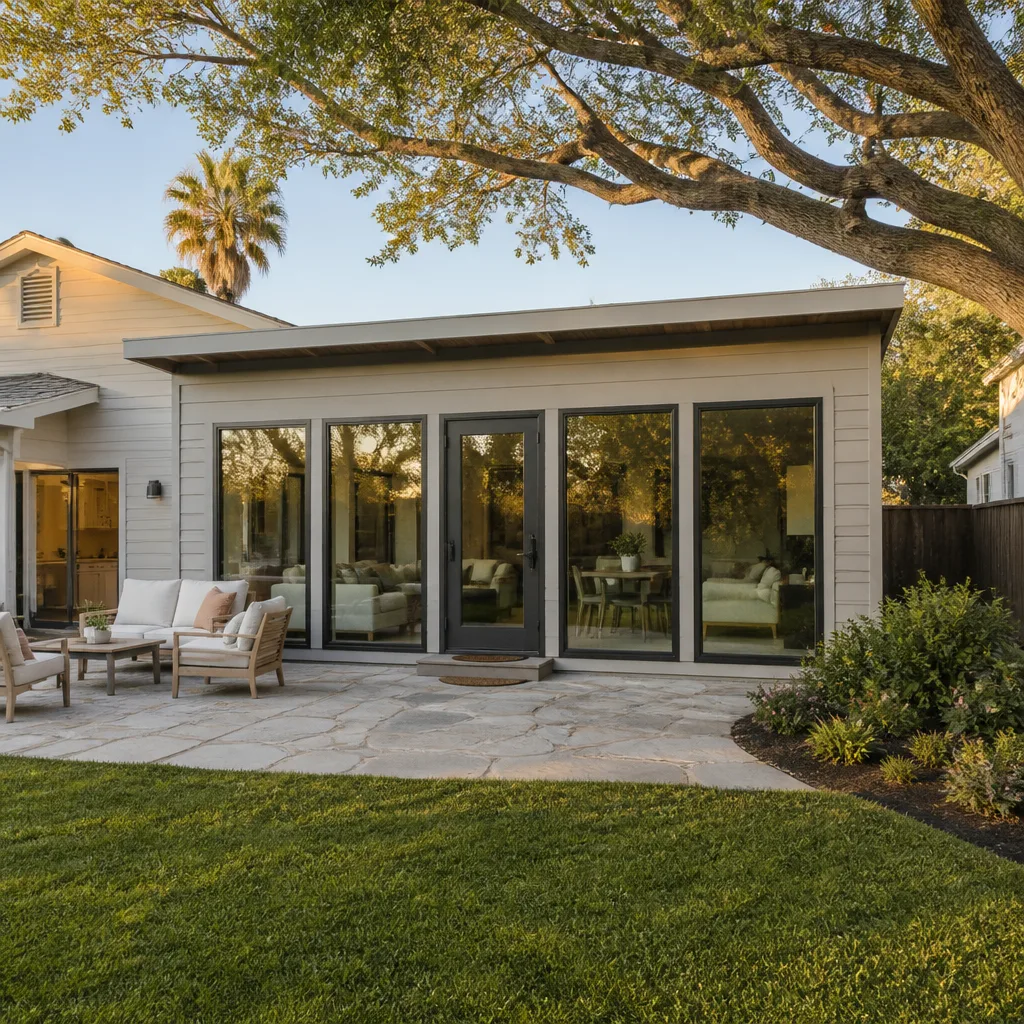
For ADUs, the biggest decision is detached versus attached. Detached ADUs on Oldcastle lots in Fort Worth work best when the lot has rear alley access or at least a 12-foot side setback, which most older Fort Worth lots do. Attached ADUs, sometimes called “junior ADUs,” tie into the existing roofline and share one wall, which keeps the cost down but changes your egress requirements. We pull plans from your existing foundation and roof layout rather than guessing, because Oldcastle’s slab-on-grade foundations in the Fort Worth clay don’t tolerate a mismatched footing line.
Styles & brands we work with







Signs Your Oldcastle Home Additions & ADU Is Failing
If you’re reading this because an addition or ADU already exists and something’s off, here’s what we see most on Oldcastle homes in Fort Worth:
- Diagonal cracks at the corner of the original house where the addition ties in. This usually means differential settling: the new slab moved at a different rate than the original, which happens a lot in Fort Worth’s expansive clay. The tie-in was never reinforced properly.
- Floor slope across the new room of more than 3/8 inch over 10 feet. That’s the threshold where we consider it a structural concern, not a cosmetic one. Oldcastle slab additions need leveling piers when they drift that far.
- Water streaking down the interior wall where the addition roof meets the existing roof. The flashing at the transition was either installed wrong or the roofline design didn’t account for Fort Worth’s spring storm rainfall. This fails inside five years if it was done cheap.
- Door frames in the addition that rack out of square every spring and fall. The soil moisture cycle in North Texas moves more than people realize, and an undersized footing lets that movement show up at the door frames.
- Electrical flicker in the addition when the AC kicks on. Older Oldcastle breaker panels get undersized when square footage grows, and the additional HVAC load on the same service panel is often the first sign the panel wasn’t upgraded for the added space.
See the difference
 Before
 After
After Before
 After
After Before
 After
AfterReplacement Cost & What’s Included
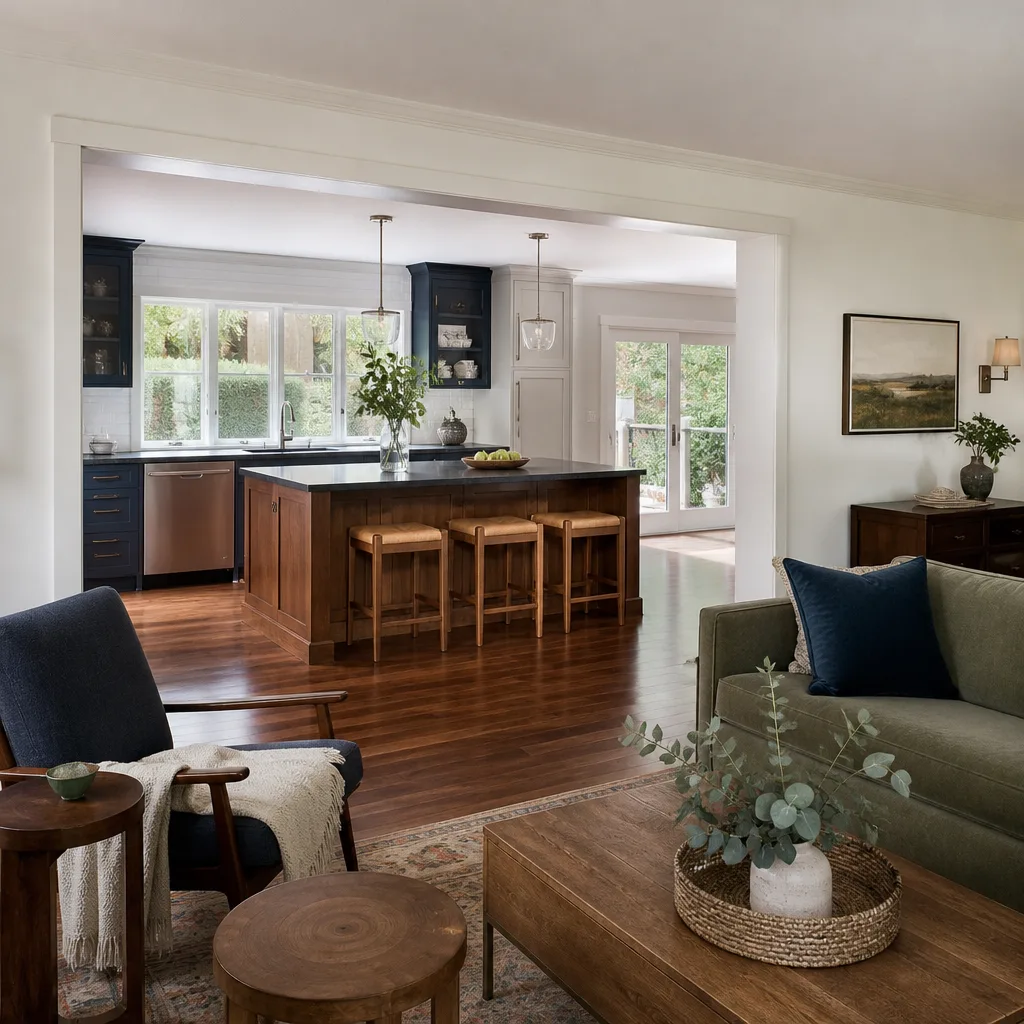
For a full home addition on an Oldcastle property in Fort Worth, plan on $45,000 to $130,000. That range covers a single-story bump-out at the low end up to a two-story addition with a bathroom at the high end. Detached ADUs run $90,000 to $220,000 depending on whether it’s a studio with a kitchenette or a two-bedroom unit with full plumbing and a separate meter. Here’s the line-item picture:
- Foundation and slab work: $8,000 to $25,000 depending on soil conditions and pier depth
- Framing, roof structure, and exterior sheathing: $15,000 to $45,000
- Rough-in plumbing and electrical (new circuits and panel work if needed): $8,000 to $22,000
- HVAC extension or dedicated mini-split system: $4,000 to $12,000
- Drywall, insulation, trim, paint, and flooring: $10,000 to $26,000
Every one of our quotes is a written, line-item price before work starts. No allowances that “might run over.” No change orders you find out about at the end. The written price is the price, and if we miss something in the scope, that’s on us, not your checkbook.
DIY or Call Us?
You can check a few things yourself. Walk the perimeter and look for cracks in the brick or siding where an addition meets the original house. Look at the roofline in the late afternoon light and see if the ridge sags or dips at the transition. Check your breaker panel label and see if the addition has its own dedicated circuits. Those observations help you have an informed conversation.
But building an addition or ADU is structural work. Foundations, roof framing, load paths, and electrical service are not the place to learn as you go. A wrong footing in Fort Worth clay shows up as a cracked slab inside three years, and by then the fix costs more than the original work. If you’ve got an addition that’s failing, or you’re planning one, call us at (682) 204-4897 before you swing a hammer. We’ll tell you straight what it costs and whether it’s worth saving.
FAQs
A properly built addition on an Oldcastle home in Fort Worth should last 50 years or more for the structure, with the roof and mechanicals on their own shorter cycles. What kills additions early here is soil movement, and the fix is a footing design that accounts for the clay’s shrink-swell cycle. Call (682) 204-4897 and we’ll look at what you’ve got.
Usually yes, if the problem is settling, flashing, or undersized circuits, and it’s caught before the framing starts racking. Repairs can run from a few thousand dollars for flashing and pier work up to $30,000 or more for a partial reframe and re-roof. The honest answer depends on what the footing and tie-in actually look like once we open it up.
A single-story addition on an Oldcastle home typically runs 10 to 16 weeks from permit to final walkthrough. A detached ADU runs 16 to 26 weeks depending on utility runs and finish level. We’ll give you a schedule in writing with the price, and we hold to it or tell you why before the delay happens.
We order per project, because no two Oldcastle additions are identical and we don’t want lumber sitting in a yard losing its straightness. We do keep framing hardware, flashing stock, and common rough-in fittings in our Fort Worth shop so the crew isn’t waiting on a supply house for the basics. Everything we install is documented by brand and spec so you know what’s in your walls.
Straight scope, firm price, no surprises at final walkthrough. That’s how Curtis Lane and the crew at Bradford Remodeling Co Fort Worth run every job, from a bedroom bump-out near the Stockyards to a full ADU off McCart Avenue. Call (682) 204-4897 for your free estimate.
Written by Curtis Lane, Owner, Bradford Remodeling Co Fort Worth at Bradford Remodeling Co Fort Worth, serving Fort Worth and nearby areas.


