
Free written scope consultation - allowances, timeline, and change-order rules on paper before a single trade is scheduled
Unilock Home Additions & ADU: The Fort Worth Owner’s Guide
Adding square footage with Unilock hardscape integration typically runs $45,000 – $130,000 in Fort Worth, and most of that cost is driven by foundation type, kitchen or bath rough-in, and how much site prep your lot actually needs. We install and build additions that tie into existing Unilock patios, walkways, and retaining walls without tearing out what still works. If you already have Unilock pavers and want the new structure to sit right against them, the price above is what you should be planning for.
Where homeowners usually catch a problem is at the transition. The addition gets framed, the drywall goes up, and then somebody notices the exterior grade doesn’t meet the existing paver line the way it should. Water pools at the threshold. The door swings out and clips the raised patio edge. Or the old Unilock border stones that matched the original house now dead-end into a foundation wall with an ugly three-inch gap. That’s the moment this page gets read.
Key takeaways:
- Fort Worth additions tied to existing Unilock work: $45,000 – $130,000 installed.
- We write the scope and the price before demolition starts, and that number doesn’t move.
- Every addition carries our 365-Day Done Right Promise in writing.
- Call (682) 204-4897 and a live person answers, day or night.
Which Unilock Models This Applies To
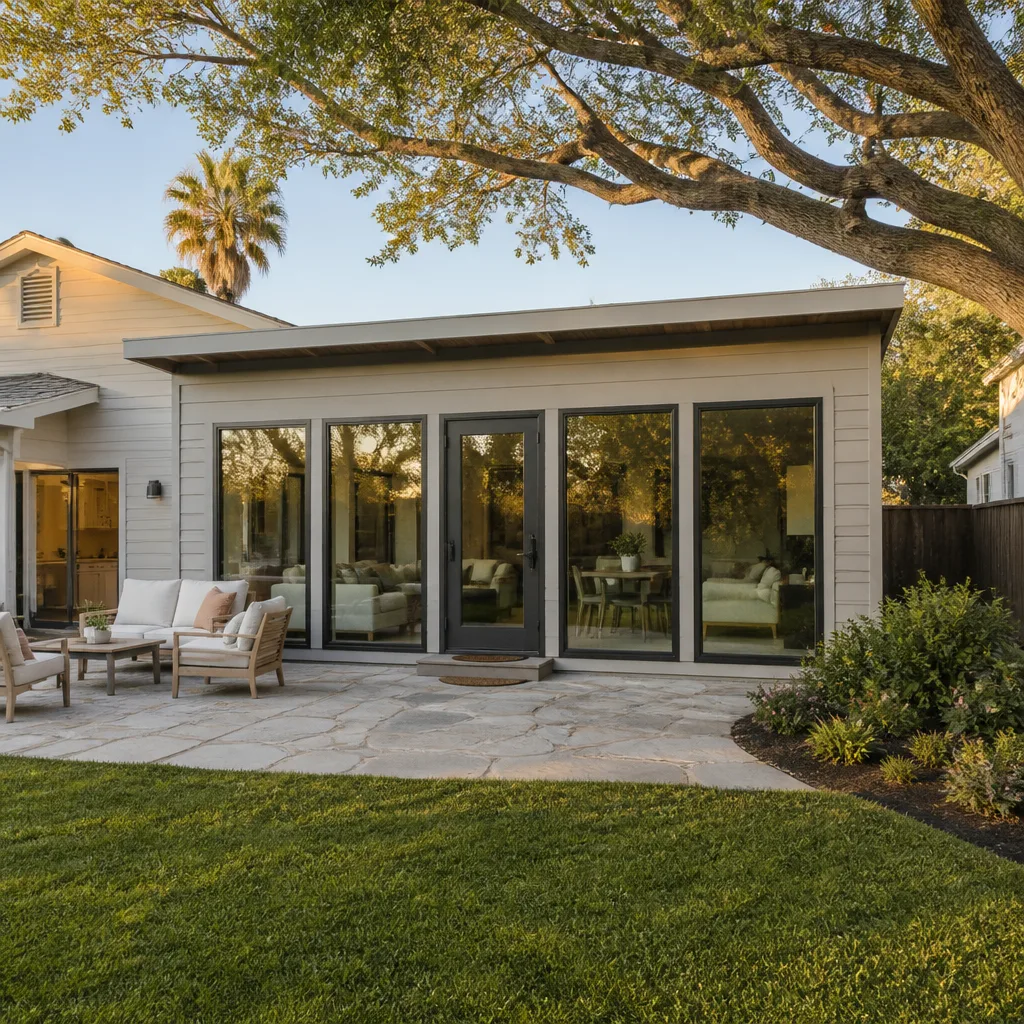
If your existing hardscape is Unilock, you’re working with one of their paver or wall lines: Beacon Hill, Courtstone, Brussels Block, Richcliff, Thornbury, or the Estate Wall and Vertica retaining systems. The part that matters for an addition is the transition piece, typically an edge restraint, border course, or a section of the wall system where the new foundation butts against it. Unilock dimensions are consistent within a series, but they are not interchangeable across series. A Brussels Block paver doesn’t match a Richcliff paver in height or joint width, and that half-inch difference gets ugly fast at a threshold.
For OEM versus aftermarket: Unilock’s own edge restraints and compatible transition pieces are the right call when the existing install is under manufacturer coverage or the color match matters. Softer, less expensive aftermarket plastic edging usually fails at the paver-to-foundation junction within two or three North Texas seasons. Fort Worth’s clay soil expands and contracts enough that a flimsy edge lets the paver line walk away from the slab, and then you’re looking at the exact gap that started the problem.
One compatibility gotcha we see on Fort Worth jobs regularly: older Unilock installs from the 1990s and early 2000s used a thinner paver profile than current production. If your pavers measure around 60mm thick, current-series replacement stones may sit proud of the old surface. We measure before we order, and we’ll tell you if matching means using a milled or alternate product.
Styles & brands we work with







Signs Your Unilock Home Additions & ADU Is Failing
- The paver line has pulled away from the new foundation wall. This is the big one. Clay soil heave pushes the edge restraint outward, leaving a channel where water runs straight down the side of the foundation instead of away from it.
- Water pools at the exterior door threshold after rain. The addition’s slab was poured at the wrong elevation relative to the existing paver patio, or the pavers have settled. Either way, you’re getting water where it shouldn’t be.
- Border course stones are chipped or cracking at the seam. The transition between a fixed slab and a floating paver system is a stress point. Once the restraint fails, every freeze-thaw cycle chips away at the exposed edges.
- The retaining wall nearest the addition is leaning or bulging. Adding a structure changes drainage patterns. Water that used to sheet across the yard now runs along the foundation and saturates the soil behind Unilock walls.
- You can feel a height difference stepping from the addition onto the patio. Even a quarter inch becomes a trip hazard, and it’s usually the first sign that piers or slab settlement are already happening.
See the difference
 Before
 After
After Before
 After
After Before
 After
AfterReplacement Cost & What’s Included
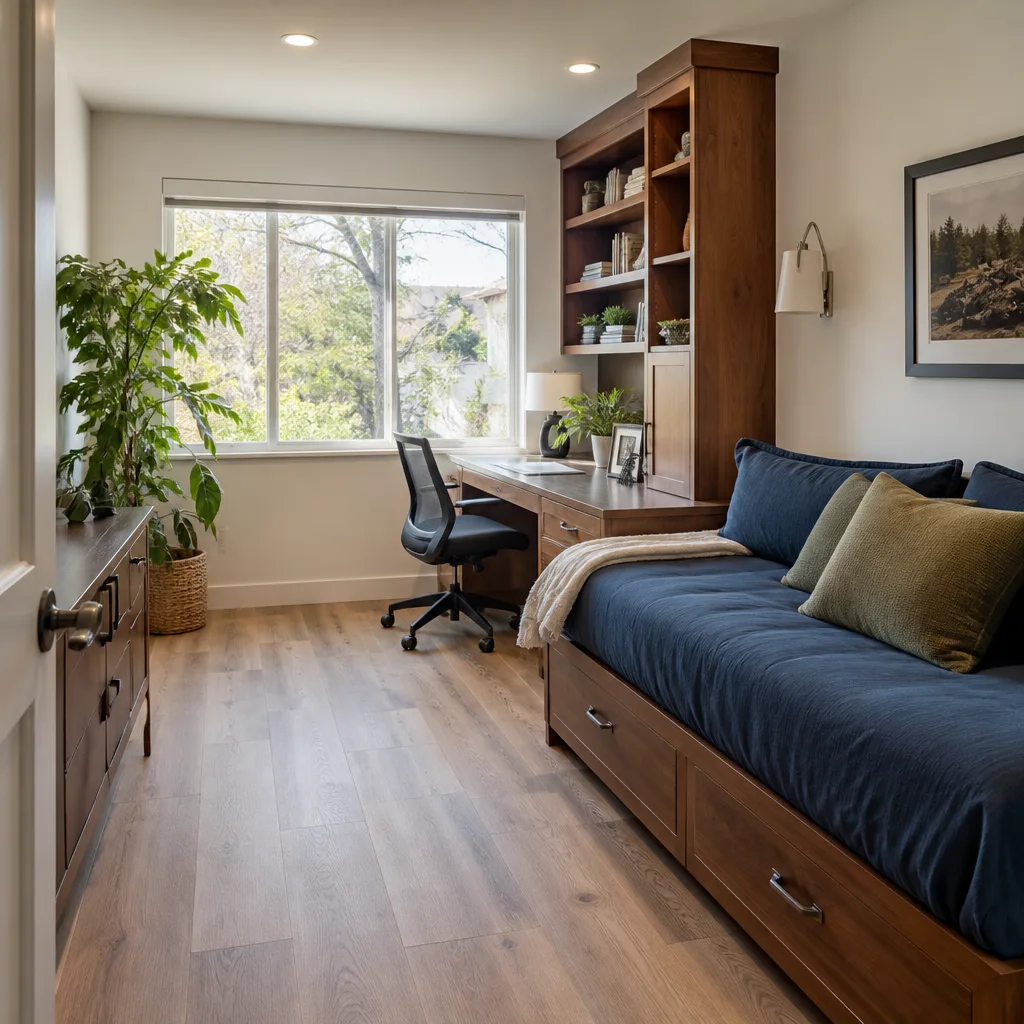
Here’s the straight pricing for Fort Worth, written before any work starts:
| Scope | Installed Price Range |
|---|---|
| Full home addition (bedroom, bath, or family room) | $45,000 – $130,000 |
| ADU construction (detached, with kitchen and bath rough-in) | $90,000 – $220,000 |
| Garage conversion to living space | $30,000 – $80,000 |
| Unilock paver re-level and edge restraint replacement at addition transition | $3,500 – $11,000 (as part of a larger patio scope) |
What moves the number: foundation type (slab versus pier-and-beam), whether you’re running new plumbing or tying into existing lines, how much roof framing changes, and the condition of the existing Unilock transition. We include permits, site cleanup, and a signed written guarantee at close. No numbers that move at the door. The 365-Day Done Right Promise covers the work for a full year after completion, and if something fails inside that window we return and correct it at no charge.
DIY or Call Us?
A homeowner can safely do some of the investigative work here. Check your paver-to-slab gap with a tape measure. Look at whether water is flowing away from the foundation or toward it during the next rain. Mark any pavers that rock underfoot. That tells you the scope of what’s wrong.
What you shouldn’t do is start resetting pavers against a foundation wall yourself, or try to re-pitch a transition by eye. Get the grade wrong and you’re routing water into your new addition. Dig into a utility line and the problem multiplies. This is structural drainage work on one side and finished living space on the other. If the expansion joint detail is wrong, your threshold fails inside of a season. Call (682) 204-4897 and we’ll come measure it properly. The estimate is free, and the price we quote is the price you pay.
FAQs
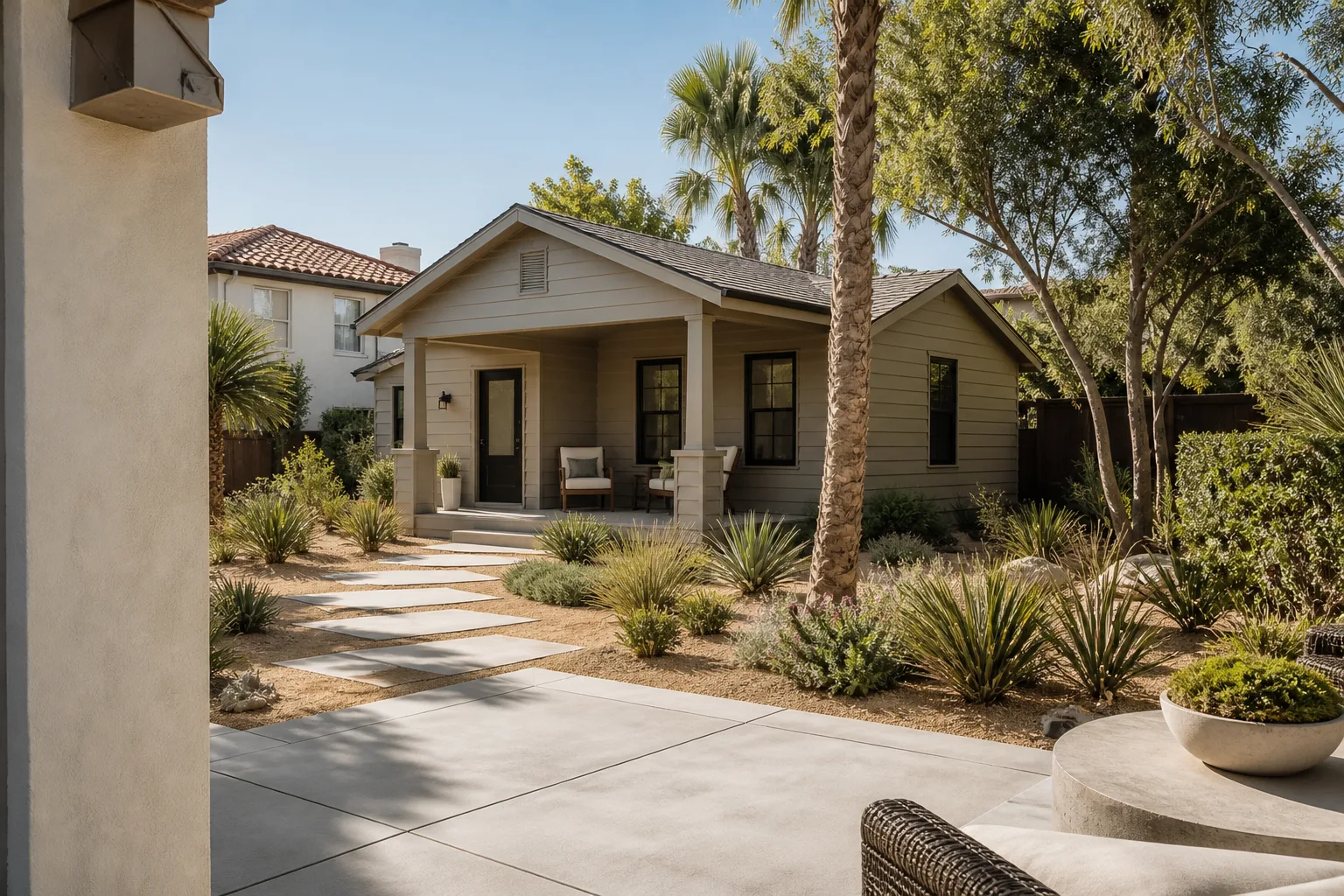
A properly installed Unilock transition with edge restraint should last 20 to 30 years in Fort Worth, but the junction detail between the slab and the pavers needs inspection every few years because our clay soil moves more than most installers accounted for. Call (682) 204-4897 and we’ll take a look at yours.
Yes, if the structural base is still sound, individual pavers and border courses can be pulled, re-leveled, and reset without replacing the whole field. We’ll tell you honestly whether the base is shot or the surface just needs attention.
A standard room addition takes eight to fourteen weeks from permit to final walkthrough, with the Unilock transition work usually completed in the final week so the exterior grade is set correctly. You’ll get a schedule in writing before we start.
We keep common Unilock edge restraint and compatible border units on the truck for service calls, and we order full pallets for larger addition projects. We also work with KraftMaid, Cambria, and Silestone for interior finishes, so the whole job is spec’d with name-brand materials. Call (682) 204-4897 for an exact quote, it’s free.
Written by Curtis Lane, Owner, Bradford Remodeling Co Fort Worth at Bradford Remodeling Co Fort Worth, serving Fort Worth and nearby areas.


