Free written scope consultation - allowances, timeline, and change-order rules on paper before a single trade is scheduled
Styles & brands we work with







See the difference
 Before
 After
After Before
 After
After Before
 After
AfterHow Much Does Kitchen Island Installation Cost in Fort Worth?
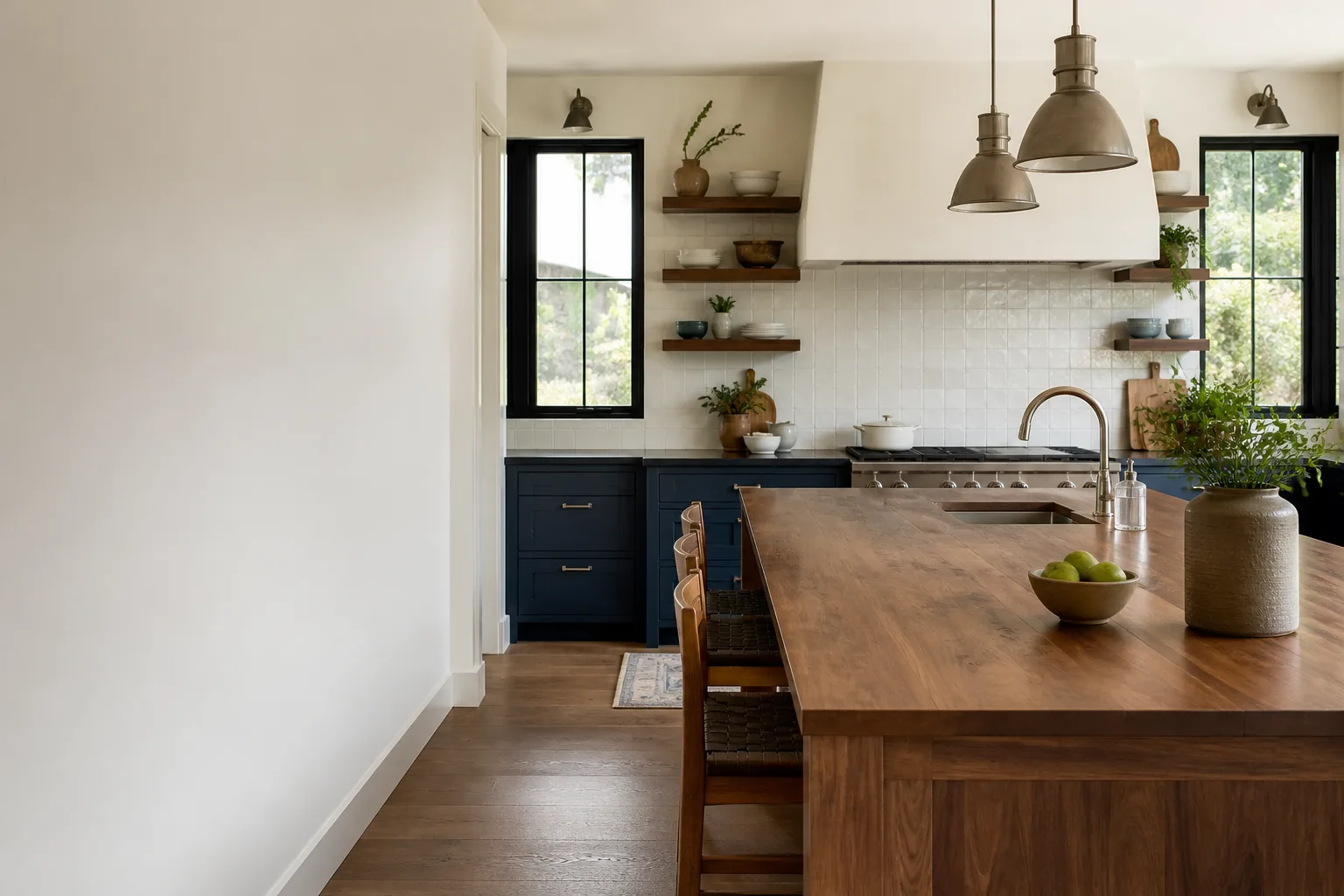
Kitchen island installation in Fort Worth typically runs $3,000 to $10,000 for a complete project in 2026. A basic island with stock cabinetry and a laminate or butcher block top lands near the bottom of that range, while a larger island with custom cabinets, quartz or granite counters, plumbing for a sink, and electrical for outlets pushes toward $8,000 to $10,000. The number that matters is the written one: at Bradford Remodeling Co Fort Worth, you get a fixed price before any work starts, and that price does not move at the door.
If you’re replacing an existing island rather than building from scratch, expect to pay 20 to 30 percent less, since the footprint, flooring, and much of the framing work are already done. We’ll break down exactly where the money goes below.
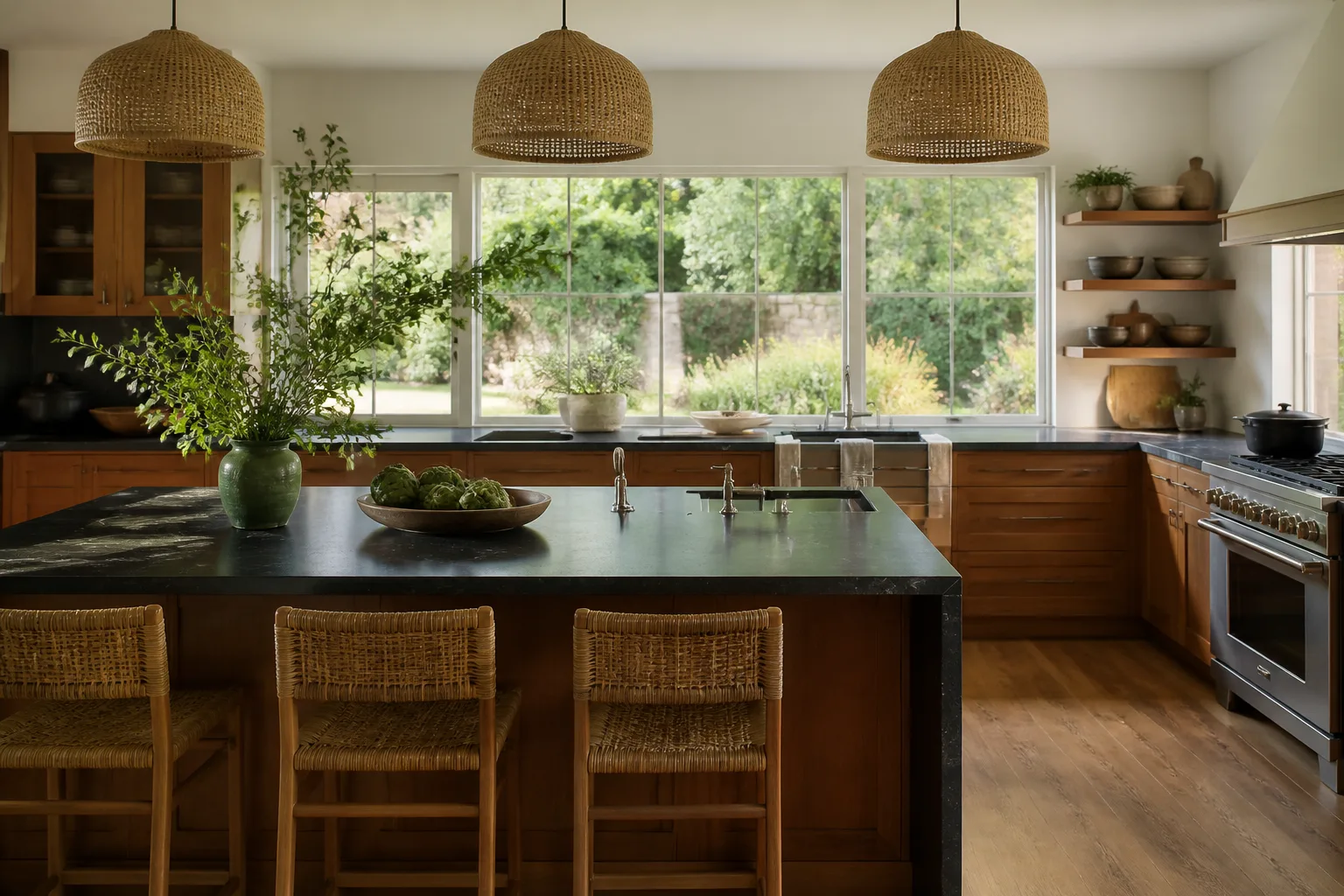
Kitchen Island Installation Cost Breakdown (2026)
Here’s what a kitchen island job actually costs in Fort Worth, line by line. These are the numbers we quote from, and they reflect what we see across Tarrant County in 2026.
| Line Item | Typical Fort Worth Range |
|---|---|
| Base cabinetry (stock, 2-4 boxes) | $800 – $2,200 |
| Semi-custom cabinetry (KraftMaid, Wellborn) | $1,800 – $4,500 |
| Countertop material and fabrication | $600 – $3,500 |
| Plumbing rough-in (sink, disposal, dishwasher) | $400 – $1,200 |
| Electrical rough-in (outlets, lighting) | $300 – $900 |
| Framing and substrate work | $250 – $800 |
| Finish carpentry and trim | $300 – $1,000 |
| Flooring patch-in around the island footprint | $200 – $700 |
| Permits and inspection fees | $150 – $500 |
On the low end, a simple 4-foot island with stock cabinets, no plumbing, and a butcher block top can be done for around $3,000. On the high end, a 7-foot island with semi-custom cabinets, a Cambria or Caesarstone quartz top, a prep sink, and dedicated outlets runs $9,000 to $10,000. What drives the number up or down is scope, not mystery: more linear feet, more trades, more material grade.
One thing to know about Fort Worth specifically: older homes in neighborhoods like Ridglea, Wedgwood, and Oakhurst often have slab-on-grade foundations, which means running a drain line for an island sink requires cutting concrete, not just drilling through a crawl space. That adds $500 to $1,500 to a plumbing-inclusive island and is a line item we flag on the written estimate before you commit. If you’re in a pier-and-beam home in Arlington Heights or Fairmount, the same drain work is usually cheaper because there’s access under the floor.
What Affects Kitchen Island Installation Pricing in Fort Worth
Every island job is different, but the cost drivers are predictable. Here’s what moves the number in Fort Worth:
- Plumbing or no plumbing. A prep sink, pot filler, or dishwasher hookup adds a plumber to the job, plus a drain run. On slab foundations, that means saw-cutting concrete. This is the single biggest swing factor, worth $1,000 to $2,500 on its own.
- Countertop material. Butcher block and laminate run $600 to $1,200 for a typical island. Granite and quartz fabrication, especially from Cambria or Caesarstone, runs $2,000 to $3,500. The material choice alone can move the total by $2,000.
- Cabinetry grade. Stock boxes from a home center are functional but limited in size and finish. Semi-custom from KraftMaid or Wellborn gives you exact widths, deeper drawers, and better hardware. The upgrade is worth $1,000 to $2,500, and it’s the difference between an island that looks added-on and one that looks original to the house.
- Island size and footprint. A 4-foot island is a workstation. A 7-foot island with seating is a room. Every additional linear foot adds cabinet boxes, countertop slab, and finish work. Figure $300 to $600 per additional foot, all-in.
- Electrical work. Code requires at least one outlet on an island, and if you want pendant lighting or a hardwired appliance like a microwave drawer, the electrician’s scope goes up. Adding a dedicated circuit runs $300 to $900 depending on panel access.
- Age of the home. Fort Worth houses built before 1990 often have smaller kitchens, dated subflooring, and electrical panels that are already near capacity. If we need to add a subpanel or repair an uneven floor before setting cabinets, that shows up on the estimate as a line item, not a surprise.
How to Save on Kitchen Island Installation
The most expensive mistake we see in Fort Worth is buying an island twice. A homeowner goes with a low bid for the first install, the cabinets delaminate or the top chips within a year, and now they’re paying someone else to tear it out and do it again. The cheapest way to build an island is to build it once. Here’s how to keep the number reasonable without cutting corners that cost you later:
- Skip the sink. If you use the island as a prep and serving surface rather than a cleanup station, you avoid the plumbing line item entirely. That’s the single easiest $1,000 to $2,500 to cut.
- Choose butcher block or a mid-grade laminate for the top now. A lot of Fort Worth homeowners do this and upgrade to quartz a few years later. The cabinet base and framing stay the same, so the future swap is a one-day job.
- Match the island footprint to your actual floor plan, not a magazine photo. A 6-foot island in a 10-foot-wide kitchen creates a bottleneck. A 4.5-foot island in the same space does everything you need and costs $1,000 to $1,800 less.
- Get a written price before work starts. Not a verbal estimate. A line-item price in writing. At Bradford Remodeling, that’s how every job runs, no exceptions. You should not be finding out the number moved once the slab is cut. Call (682) 204-4897 and we’ll put it on paper, free.
Fort Worth Kitchen Island Styles and What They Cost
Not all islands serve the same purpose, and the style you choose sets the baseline for the bid. Here are three common configurations we install in Fort Worth homes, with real price expectations for 2026:
1. Prep Island (No Seating, No Sink)
A 3.5 to 5-foot island with base cabinets, a single run of countertop, and one outlet. This is the workhorse style for kitchens in Ryan Place, Handley, and other mid-century Fort Worth neighborhoods where space is tighter and the island has to earn its footprint. Expect $3,000 to $5,500 depending on cabinet grade and top material. No plumbing means no concrete cutting, and the electrical scope is usually one outlet tapped from an existing circuit.
2. Island with Seating and Storage
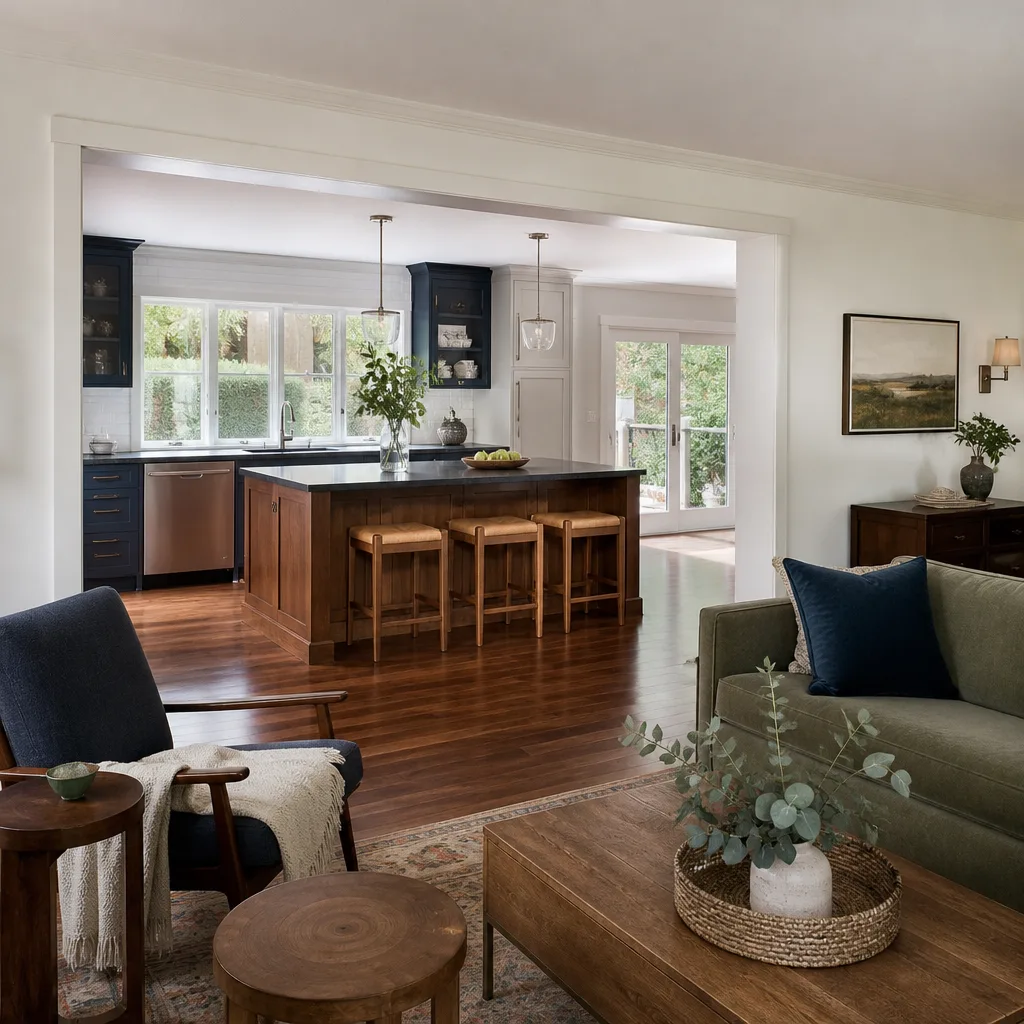
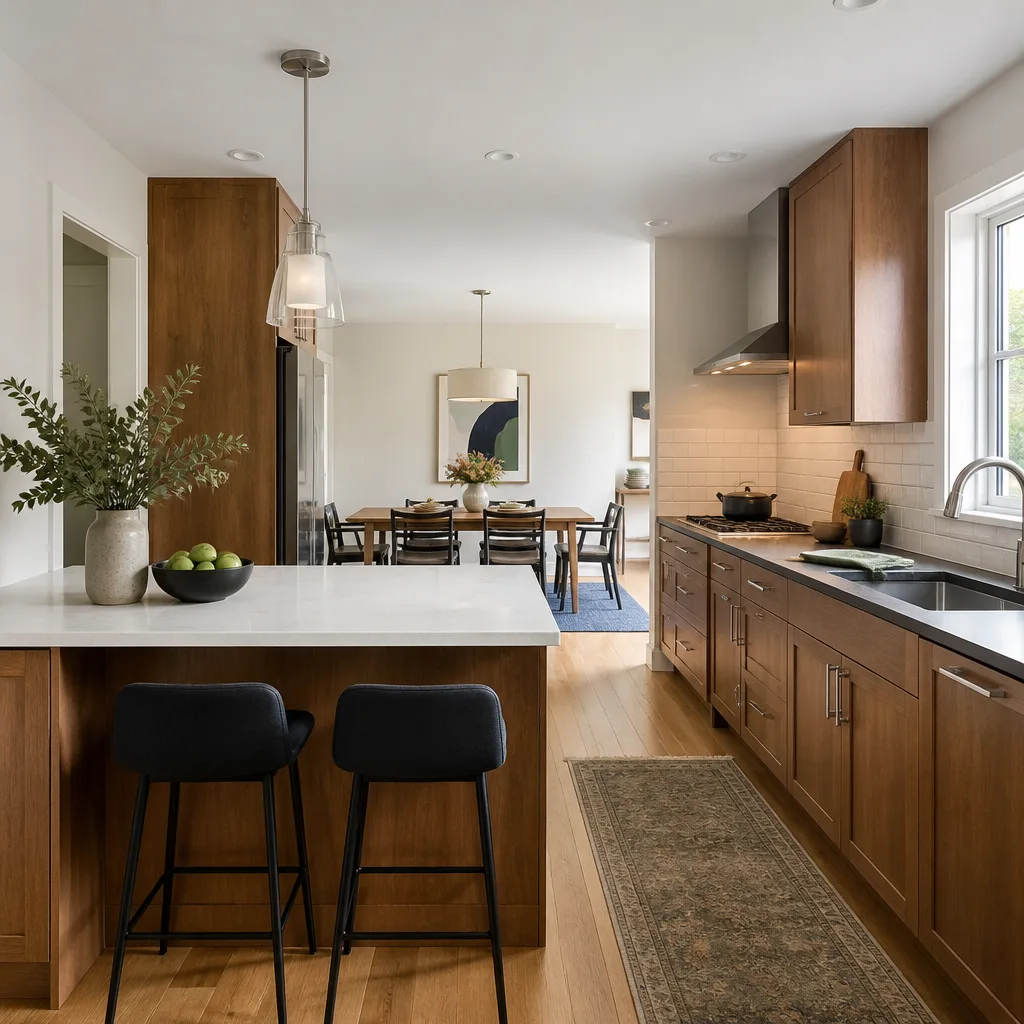
This is the most common request we get from homeowners in Walsh Ranch, Chisholm Trail, and the newer builds along the Chisholm Trail Parkway corridor. A 5 to 7-foot island with an overhang for bar stools, deep drawers on the working side, and cabinets on the seating side. Countertop fabrication gets more involved because of the overhang and the larger slab. Plan on $5,000 to $8,000. If you add pendant lighting, that’s another $300 to $600 in electrical labor and fixture rough-in.
3. Full-Service Island with Sink and Appliances
This is a second kitchen workstation: prep sink, disposal, maybe a dishwasher or beverage fridge, dedicated outlets, and often a pot filler. These are common in Colleyville, Southlake, and the larger new-construction and remodel homes in the northern part of the Fort Worth metro. The plumbing work is real, especially on slab foundations, and the electrical scope typically requires a new home run to the panel. Budget $7,500 to $10,000. This is also where the permit conversation gets serious: adding plumbing fixtures and circuits requires a city permit in Fort Worth, and we pull them on every job, no exceptions.
Materials: What the Cabinets and Countertops Actually Cost
The finish materials are where most of your budget goes, and they’re also where a bad bid hides its corners. Bradford Remodeling installs name-brand materials with manufacturer specifications and warranties that we can point to by name. Here’s what you should expect to pay for the material tiers we actually install, not vague “upgrades”:
- KraftMaid cabinets for a typical 5 to 6-foot island base: $1,800 to $3,200. These are semi-custom, made in the U.S., and the door styles and finishes are consistent across the whole kitchen, so your island doesn’t read as a patch job.
- Wellborn cabinets for the same footprint: $2,200 to $4,500. Wellborn is a family-run Alabama manufacturer that’s been building cabinets since 1961. We use them when a homeowner wants specific wood species, glazed finishes, or deeper dovetail drawers that stock lines don’t offer.
- Cambria quartz countertop including fabrication and installation: $2,000 to $3,500 for a typical island. Cambria is American-made, non-porous, and comes with a transferable warranty. No sealing required.
- Caesarstone quartz: $1,800 to $3,200. Similar performance, different color catalog. Caesarstone has been making quartz since 1987 and offers a lifetime warranty on residential installations.
- Butcher block from a name-brand supplier like John Boos: $600 to $1,200. It’s warm, it’s repairable, and it keeps the initial number low while leaving the door open for a stone upgrade later.
Here’s the reason we’re specific about brands: a materials list you can verify is a bid you can hold someone to. “Premium granite” means whatever the installer says it means. “Cambria Brittanicca, 3cm, mitered edge” is a product you can look up. The Garrison Standard, the framework our company operates under, requires that level of specificity on every written estimate. It’s not extra paperwork. It’s the thing that keeps you from paying for something you didn’t get.
Fort Worth Permits and Code Requirements
If your island includes a sink, a dishwasher, or a new electrical circuit, the City of Fort Worth requires a permit. No gray area. The permit covers the plumbing modification and the electrical work, and the city will send an inspector after rough-in and again at final. This is not a cost to fight. It’s $150 to $500 depending on scope, and it’s the only way to know the work meets current code.
Unpermitted island plumbing is a real problem in Fort Worth’s older neighborhoods. We’ve walked into kitchens in Stop Six, Polytechnic, and Meadowbrook where a previous owner or a cash handyman added an island sink with no permit and no licensed plumber. The sink drains into a floor drain, or the vent is missing, and now the homeowner is paying double: once to tear out the bad work, once to do it right. If you’re buying a house with an island sink and you weren’t told who installed it, have it checked.
Bradford Remodeling pulls permits on every job that requires one. The permit is a line item on your written estimate. If a contractor tells you a permit “isn’t necessary” for a sink or a new circuit in Fort Worth, that’s not a favor. It’s a shortcut that becomes your problem when you sell the house.
Timeline: How Long Does Island Installation Take?
A straightforward prep island with no plumbing typically takes 3 to 5 working days from demo to done. A full-service island with a sink, electrical, and custom countertop fabrication runs 2 to 3 weeks, mostly because the quartz or granite slab is cut off-site and the city inspection schedule sets the pace.
Here’s what the schedule looks like for a typical plumbing-inclusive island in Fort Worth:
- Day 1-2: Demo (if replacing), layout, any concrete cutting for drain lines, and plumbing rough-in.
- Day 3-4: Electrical rough-in, framing, cabinet installation.
- Day 5-6: Rough-in inspection (city), then countertop template and fabrication. Fabrication takes 1-2 weeks.
- Day 12-16: Countertop installation, sink and fixture hookup, outlet trim-out, final inspection.
We don’t start your island and then disappear for a month to run another job. The crew is on site consecutively, and the on-site work days are scheduled around the fabrication shop’s lead time, not around our convenience. You’ll know the schedule before we start, in writing, as part of the same document as the price.
How Bradford Remodeling Prices an Island (And Why It’s Different)
Most remodelers in Fort Worth price an island the same way they price everything else: an estimate that covers “labor and materials” with no line items and no fixed number. Then the change orders start. The sink drain hit a pipe. The panel needs a sub. The countertop fabricator’s quote came back higher. Each one of these is a new number after the old number was already agreed to.
That’s not how we run it. Under the Garrison Standard, the price we quote is the price we do the work for. It covers the scope we wrote down, including the permit, the materials by brand name, and the labor. If site conditions produce a legitimate cost increase, we flag it before the work starts and we put the revised number in writing. You never find out at the end of the job that you owe more than you approved.
Curtis Lane, who leads our Fort Worth operation, has been doing this long enough to know that a remodeler’s reputation is built one unfixed price at a time. The reason we write the number down is simple: a written price is the only kind that can be honored. A spoken price is a conversation. A written price is a commitment.
Is a Kitchen Island Worth the Cost?
If you’re planning to live in your Fort Worth home for five or more years, the honest answer is yes, and not just for resale. A well-built island with seating changes how a family uses the kitchen. It gives you a prep surface, a homework station, a place for people to sit while you cook, and storage that a row of wall cabinets can’t replace.
If you’re selling within two years, the calculus changes. You’ll recover some but not all of the cost in the sale price. A $6,000 island in a $350,000 Fort Worth home makes the kitchen more competitive in listings, but it’s not going to add $6,000 to the appraisal. Buyers in this market notice a badly done island more than they reward a standard one. If you’re going to install an island before listing, make it a good one, because a sagging countertop overhang or a wobbly cabinet box will cost you more in buyer negotiation than the island adds.
Our recommendation: build the island you want if you’re staying. Build a simple, correct island if you’re selling. Either way, build it once and make sure the crew stands behind it.
For a deeper look at what goes into a Fort Worth island project from start to finish, read our Kitchen Island Installation in Fort Worth guide. And if you’re planning a bigger kitchen overhaul alongside the island, start with the home page to see how we approach full kitchen remodels under the same written-price standard.
FAQs – Kitchen Island Installation Cost
How much does it cost to install a kitchen island with a sink in Fort Worth?
An island with a prep sink and a dishwasher hookup typically costs $7,500 to $10,000 in Fort Worth, including the plumbing rough-in, electrical work, and permit. The concrete cutting required on slab foundations adds $500 to $1,500 compared to a pier-and-beam home. Call (682) 204-4897 for an exact written quote; estimates are free.
How much does a kitchen island cost without plumbing?
A basic island with cabinets, a countertop, and one outlet runs $3,000 to $5,500 in Fort Worth. Skipping the sink is the single biggest cost reduction, and it also removes the permit and inspection requirements from the job.
Is it cheaper to buy a prefab island than to build one?
A prefab or rolling island from a big-box store runs $300 to $1,500, but it’s not a built-in. It doesn’t add storage value, it moves when you lean on it, and it looks temporary because it is. A built-in island costs more up front, but it’s a permanent fixture that actually improves the kitchen. The real price comparison is between a piece of furniture and a piece of the house.
How long does kitchen island installation take?
A non-plumbing island takes 3 to 5 working days. An island with a sink, dishwasher, and stone countertop takes 2 to 3 weeks, most of which is countertop fabrication and city inspection scheduling. We give you the full timeline in writing with the estimate.
Do I need a permit to install a kitchen island in Fort Worth?
If the island includes a sink, a dishwasher, or a new electrical circuit, yes. A plumbing and electrical permit from the City of Fort Worth runs $150 to $500 and requires inspections at rough-in and final. A storage-only island with no plumbing and no new circuit does not require a permit. Bradford Remodeling pulls all required permits and includes the fee as a line item on your written estimate.
What’s the most expensive part of a kitchen island?
For most Fort Worth projects, the two biggest line items are the countertop fabrication ($600 to $3,500) and the plumbing rough-in if you’re adding a sink ($400 to $1,200 plus concrete cutting on slab). Cabinet grade is the third major swing factor. If you want to reduce the total, choose a butcher block top and skip the sink now; both are upgradeable later without touching the cabinet base.
Get a Written Price for Your Fort Worth Kitchen Island
You should know what your island costs before you buy the cabinets, before we cut the slab, and before anyone starts sawing. That’s the only way this works. Call (682) 204-4897 and we’ll schedule a site visit, write the price down, and email it to you. No deposit required, no commitment to proceed. If we install it, the work is covered by the 365-Day Done Right Promise: if anything fails within a year of completion, we come back and fix it at no charge. A live person answers the phone 24/7, and the person you talk to can actually schedule the visit, not just take a message.
Pricing reflects the Fort Worth market as of 2026. Written by Curtis Lane, Owner at Bradford Remodeling Co Fort Worth, serving Fort Worth and Tarrant County with written-price kitchen remodeling since 2004. Bradford Remodeling Co Fort Worth offers free estimates – call (682) 204-4897.
What Our Customers Say
"Respectful crew. Covered the floors and swept every day."
- Jackie T."Fixed price, written scope, and no surprise charges."
- Wes D."Home remodel with a new floor plan. Handled structural work and permits without drama."
- Gus R.